

If you have been avoiding steak, corn, or apples since losing your teeth, you are not alone.
Tooth loss changes how people eat long before it changes how they smile, and many patients tell their dentist they quietly gave up their favorite foods years earlier.
Most people with implant-supported dentures can return to a wide, satisfying diet, though how much and how soon depends on the type of denture, how well it fits, and how healing is going.
Snap-on dentures, fixed implant dentures, and traditional dentures each handle food differently, and even within implant options, your bite alignment and gum health play a role.
The good news is that eating with implant supported dentures gets easier as your mouth adjusts.
With the right food choices early on and simple chewing habits, most patients can gradually return to a wider range of foods.
Key Takeaways
- Implant-supported dentures restore significantly more chewing power than traditional dentures, though the exact experience varies by denture type and healing stage.
- A food-by-food approach, starting soft and adding texture gradually, helps you avoid sore spots and rebuild confidence faster.
- Persistent soreness, clicking, or a shifting bite are signs to call your dentist, not signs to push through on your own.
Table of Content
- How Denture Design Changes What You Can Eat
- A Food-by-Food Plan for the First Month
- How to Eat More Comfortably and Confidently
- Foods to Avoid or Modify During Month One
- When Chewing Problems Mean You Need an Adjustment
- A Secure Fit Helps You Enjoy More of the Foods You Love
- Frequently Asked Questions
How Denture Design Changes What You Can Eat
The type of denture you wear has more to do with what you can chew than almost any other factor.
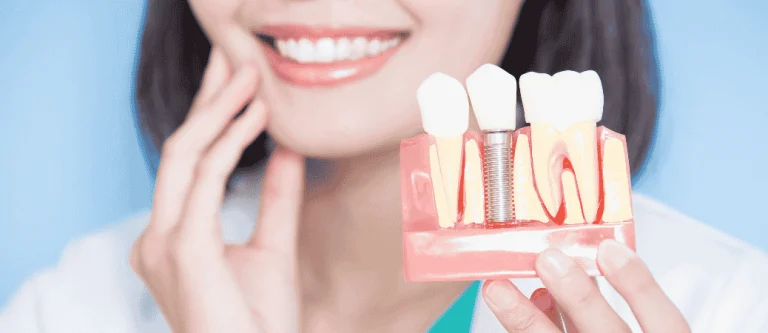
Traditional dentures rest on your gums, partial dentures clip onto remaining natural teeth, and implant supported dentures anchor to dental implants placed in your jawbone.
That difference in support changes your bite force, your bite alignment, and how confident you feel biting into something firm.
Denture adhesive can help traditional and conventional dentures feel more secure, but adhesives cannot replace the stability that comes from anchoring prosthetic teeth directly to bone.
If you are comparing your options, this breakdown of implant supported dentures vs dentures walks through how each option handles daily wear and tear, including meals.
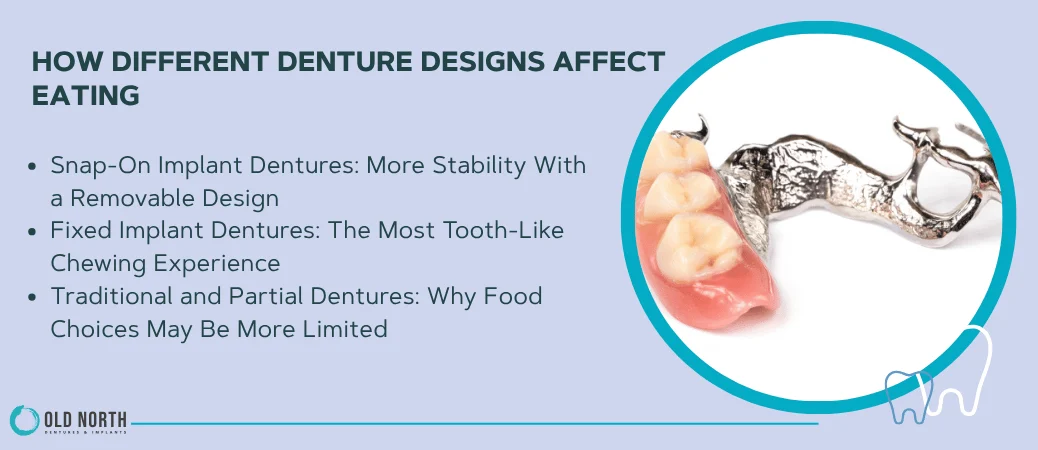
Snap-On Implant Dentures: More Stability With a Removable Design
Snap-on dentures attach to two or more implants and snap into place, giving you noticeably more bite strength than adhesive-based dentures while still being removable for cleaning.
Many patients describe the difference as night and day compared to a denture that shifts every time they bite down.
You will still want to ease into firmer foods, since the denture itself sits on a supportive base rather than being permanently fixed like a natural tooth root.
Patients considering this option often start by reviewing snap on implant dentures to understand how many implants are typically needed for a stable fit.
Fixed Implant Dentures: The Most Tooth-Like Chewing Experience
Fixed implant dentures are permanently attached to multiple dental implants, and they come closest to replicating natural chewing.
Because they do not move during meals, patients often report feeling comfortable biting with more confidence sooner than with removable options.
Full-arch fixed solutions, sometimes called all-on-x, distribute bite force across several implants rather than relying on gum support.
That distributed pressure is part of why patients with full mouth dental implants often describe eating as one of the biggest quality-of-life changes after treatment.
Traditional and Partial Dentures: Why Food Choices May Be More Limited
Traditional dentures and partial dentures rely on your gums and remaining natural teeth for support, which naturally limits bite force.
Sticky foods, tough meats, and hard, crunchy items are more likely to dislodge a traditional denture or cause a sore spot.
This does not mean you are stuck with a bland diet. It means food choices, bite technique, and adhesive use all matter more than they would with an implant-supported option.
If you are dealing with a denture that never quite feels secure, traditional dentures paired with better adhesive habits can still improve your eating experience, though many patients eventually explore implants for more consistent chewing power.
| Feature | Traditional/Partial Dentures | Snap-On Implant Dentures | Fixed Implant Dentures |
| Support | Gums/remaining teeth | 2-4 dental implants | 4+ dental implants |
| Removable | Yes | Yes | No |
| Relative bite strength | Lower | Moderate to high | Highest |
| Adhesive needed | Often | Rarely | No |
| Best for tough/chewy foods | Limited | Improved | Closest to natural |
A Food-by-Food Plan for the First Month
Your exact eating timeline depends on the type of implant-supported denture, your procedure, and how your implants are healing, so follow the food instructions provided by your dental team.
Days 1–7: Start With Soft, Low-Chew Foods
Stick to foods you barely have to chew during the first week. Mashed potatoes, scrambled eggs, yogurt, soft scrambled fish, and blended soups are good starting points because they put almost no pressure on your gums or new dentures.
Cut everything into small bites even when the food is soft. This keeps you from accidentally biting down harder than intended while your mouth adjusts to the feel of prosthetic teeth.
Weeks 2–3: Add Tender Proteins and Soft Crunch
Once the first week feels manageable, add tender proteins like flaked fish, ground meat, and well-cooked pasta.
You can also introduce softer fruits and vegetables, such as ripe bananas, cooked carrots, and canned peaches.
Avoid tough meats and anything stringy, since these require more sustained chewing power than most people have rebuilt by week two or three.
If chewing causes discomfort on one side, avoid forcing it and let your dental team know if the problem continues.
Week 4 and Beyond: Test Firmer Foods One at a Time
By week four, many patients start testing firmer textures like soft-crust bread, roasted vegetables, and tender cuts of chicken.
Introduce one new firm food at a time so you can tell which food, if any, causes soreness.
Front teeth and canines are not designed to bite through tough textures right away. Use your back teeth for firmer bites, and keep portions small until you know how your dentures respond.
Patients getting a fixed or full-arch restoration often follow a similar pattern during their broader healing timeline outlined for full mouth dental implants candidates.
How to Eat More Comfortably and Confidently
Comfortable eating with implant dentures comes down to three habits: taking small bites, chewing slowly on both sides, and avoiding front-tooth biting until your dentures feel fully stable.
These habits protect your denture fit while your mouth relearns how prosthetic teeth feel compared to natural teeth.
Why Small Bites and Slow Chewing Matter
Small bites reduce the pressure placed on any one spot in your mouth, which lowers your risk of sore spots.
Slow chewing gives your tongue and cheeks time to help position food properly, since they play a bigger role with dentures than most people expect.
How to Balance Pressure on Both Sides of Your Mouth
Chewing on both sides at once, rather than favoring one side, spreads bite force evenly and helps keep your denture from tipping or shifting.
This is especially useful with snap-on dentures, where uneven pressure can cause a temporary rocking feeling.
When to Use Your Side Teeth Instead of Biting With Front Teeth
Save your front teeth and canines for smaller, softer bites, and use your side teeth for anything firmer.
Biting directly into food with your front teeth can rock a removable denture forward and strain the attachment points, so many dentists recommend tearing or cutting food first instead of biting straight in.
Foods to Avoid or Modify During Month One
Certain foods deserve caution during your first month, not a permanent ban.
Sticky candies, hard shells, and tough meats can stress your denture attachments or irritate healing gums, but most can return to your plate later with a few smart modifications.
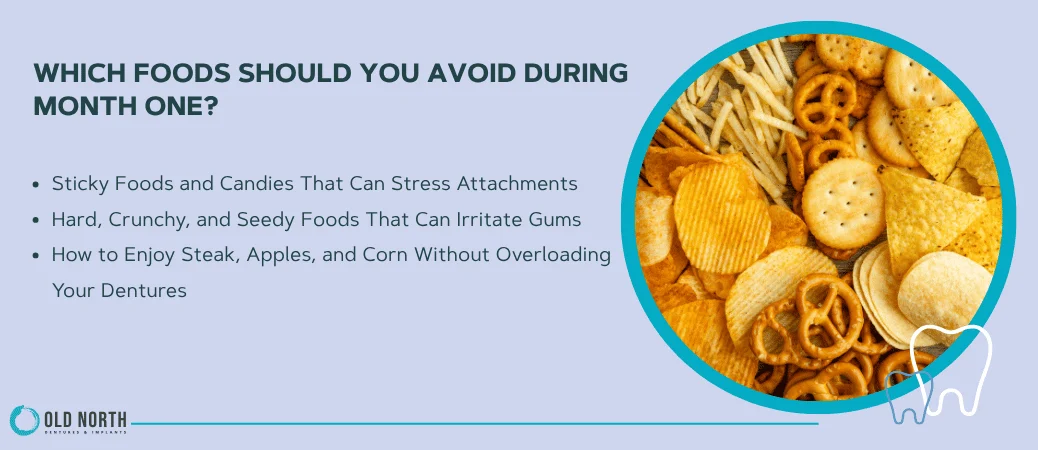
Sticky Foods and Candies That Can Stress Attachments
Caramel, taffy, and other sticky candies can pull at implant supported dentures or loosen traditional dentures with repeated chewing.
The pulling motion puts uneven force on attachments that are still settling in during the early months.
Hard, Crunchy, and Seedy Foods That Can Irritate Gums
Nuts, seeds, and hard, crunchy snacks can slip underneath a denture and irritate your gums, sometimes without you noticing right away.
Popcorn hulls and small seeds are common culprits for lingering, low-level soreness that patients mistake for a poor fit.
How to Enjoy Steak, Apples, and Corn Without Overloading Your Dentures
You do not have to give up steak, apples, or corn on the cob permanently.
Cutting steak into thin strips against the grain, slicing apples instead of biting them whole, and cutting corn off the cob are simple modifications that let you enjoy the flavor without overloading your bite.
When Chewing Problems Mean You Need an Adjustment
Ongoing pain, looseness, or clicking while you eat means your denture likely needs a professional adjustment, not just more practice.
These signs point to a fit issue or bite alignment problem that will not resolve on its own.
Loose Dentures, Clicking, and Shifting During Meals
A denture that clicks, shifts, or feels loose during meals is telling you something about its fit.
This is common enough that many patients search for a loose dentures implant solution after years of frustration with a traditional denture that never quite sat right.
Persistent Sore Spots and Changes in Your Bite
A sore spot that lasts more than a couple of days, or a bite that suddenly feels uneven, needs a dentist’s attention.
Left unaddressed, these issues can affect your gums and even put uneven strain on the jawbone supporting your implants.
Why Oral Hygiene and Follow-Up Visits Protect Long-Term Function
Good oral hygiene around your implants and gums protects the long-term function of your denture, not just your comfort at the dinner table.
Cleaning under an upper denture and around implant attachments prevents the kind of gum irritation that leads to sore spots and bite changes.
Routine dental implant maintenance visits let your dentist catch small fit issues before they turn into bigger chewing problems.
A Secure Fit Helps You Enjoy More of the Foods You Love
A well-fitted denture is the single biggest factor in how much of your old diet you get back.
Implant-supported dentures and implant dentures generally restore more chewing power than dentures relying on gum support alone, which is why so many patients describe eating as the first thing that feels normal again.
Good oral hygiene, realistic expectations, and a willingness to call your dentist when something feels off all play a part in that outcome.
Natural teeth took years to master, and prosthetic teeth deserve a little patience too.
The team at Old North Dentures and Implants works with patients through every stage of that adjustment, from the first soft-food week to the day steak is back on the menu.
If your current denture keeps you from enjoying meals, it may be time for a conversation about your options.
Old North Dentures and Implants offers evaluations to help you understand whether a snap-on or fixed implant solution fits your goals, your budget, and your bite.
Frequently Asked Questions
Can you eat a hamburger with implant-supported dentures?
Most patients with implant-supported dentures can eat a hamburger, especially once they are a few weeks past their initial adjustment period.
Cutting the burger into smaller sections and chewing slowly on both sides makes it easier to manage than biting straight through a thick, stacked burger.
Can you eat corn on the cob with snap-in dentures?
Corn on the cob is possible with snap-in dentures for many patients, but biting directly into the cob puts a lot of pressure on your front attachments.
Cutting the kernels off the cob first is a simple way to enjoy the same flavor with much less strain on your denture.
What foods should you avoid during the first month with implant dentures?
During the first month, avoid sticky candies, tough meats, hard nuts, and seeds, since these can stress healing gums and denture attachments.
Soft foods and small bites are the safest choice while your mouth adjusts to your new dentures.
Can you bite into an apple with dental implants?
Biting straight into a whole apple is one of the last things most patients try, even with well-healed dental implants, because it puts sudden
pressure on the front teeth. Slicing the apple into wedges lets you enjoy it much sooner and with far less risk of a sore spot.
Why do my implant-supported dentures hurt when I chew?
Pain while chewing usually points to a fit problem, an uneven bite, or a sore spot that has not had time to heal.
This is common enough in the first few weeks that it is worth mentioning to your dentist, since a quick adjustment often resolves it.
Can you sleep with implant-supported dentures?
Removable implant-supported dentures, like snap-on styles, are generally taken out at night to give your gums a rest and to keep the appliance clean.
Fixed implant dentures stay in place permanently, similar to natural teeth, so sleeping with them in is normal and expected.