

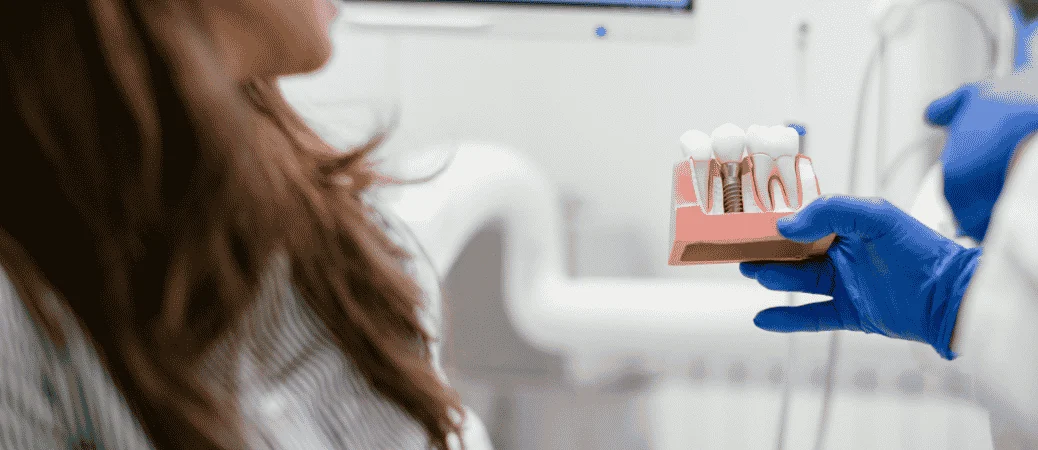
Being told you don’t have enough jawbone for implants can be discouraging, especially when you’re already dealing with missing teeth.
Fortunately, several dental implant bone loss options may help, including bone grafting, sinus lifts, and specialized implant placement.
The right treatment depends on how much bone remains, its height and width, and the location of nearby nerves and sinuses.
Dental implants can provide a stable, long-term solution for replacing missing teeth, even when additional bone-building procedures are needed.
At Old North Dentures and Implants, a detailed evaluation and 3D imaging can help determine which treatment options may work for your jaw
Key Takeaways
- No single percentage or millimeter number decides whether you can get implants.
- Mild to moderate bone loss can often be handled with careful placement or bone grafting.
- Severe loss may call for angled or specialty implants, and some cases need a specialist’s judgment.
Is There a Bone Loss Cutoff for Implants?
There is no universal cutoff. Dentists judge each implant site by its bone height, width, and density, and they need a 3D picture to measure those well.
Older rules of thumb about “enough bone” still guide planning. Modern techniques have made them much more flexible.
Why There Is No Universal Percentage or Millimeter Cutoff
A number like “50% bone loss” sounds clear, but it leaves out the details that decide an implant plan. Fifty percent of what?
Bone can shrink in height, in width, or both. It can also shrink in one spot and stay thick a few teeth away.
Location changes everything. Losing a few millimeters of height in the lower front jaw is a very different problem from losing the same amount in the upper back jaw, where the sinus sits just above the ridge.
Traditional implant placement generally requires enough bone to surround and support the implant safely.
However, modern implant designs and techniques, including shorter implants, narrow-diameter implants, and bone augmentation, may allow treatment in selected cases with reduced bone volume.
There is a second kind of bone loss to keep separate from the first. Bone loss before an implant is about whether there is room to place one.
Bone loss around an implant you already have is a health problem with the implant itself.
Researchers track that second kind closely.
A published review examined how researchers use different thresholds to evaluate marginal bone loss around dental implants.
These measurements help assess implants after placement, rather than determine whether someone has enough bone for a new implant.
How Bone Height, Width, and Density Affect Implant Placement
An implant works through osseointegration, which means living bone grows tightly onto the implant’s titanium surface. For that to happen, the implant has to sit firmly in bone from the first day and stay still while it heals.
Here is what each measurement means for you:
- Bone height: The up-and-down depth of bone. In the lower jaw, it is measured down to the nerve that gives feeling to your lip and chin. In the upper jaw, it is measured up to the sinus.
- Bone width: How thick the ridge is from cheek side to tongue side. Surgeons like to see a thin wall of bone on every side of the implant.
- Bone density: How solid or spongy the bone feels. It is often graded from Type 1 (very dense) to Type 4 (soft). Softer bone may need a different implant design or a longer healing time.
A tall but very thin ridge might need widening. A wide but short ridge under the sinus might need a sinus lift. Two people with the “same” amount of loss can end up with very different plans.
What a CBCT Scan Reveals About Your Options
A CBCT scan (cone beam computed tomography) is a 3D X-ray of your jaw. It takes less than a minute, and you sit or stand while the machine circles your head.
CBCT imaging helps your dentist measure available bone, examine its shape, and identify important structures such as nerves and sinuses.
It also supports precise implant planning, although CBCT measurements alone do not provide a definitive assessment of bone density.
In our experience, this scan is often where a “no” turns into a “here’s how.” If an earlier opinion relied only on 2D X-rays, ask whether a 3D scan was ever taken.
What Can Help When Some Bone Is Missing?
With moderate bone loss, many people can still get implants. The fix might be a shorter or angled implant, a graft placed during the same visit, or a separate bone-building step first.
The upper back jaw has its own fix, called a sinus lift.

When Can an Implant Be Placed Without a Graft?
You may skip a graft when the bone you have can hold the implant firmly with a margin on all sides. Narrow-diameter or shorter implants help here.
So does tilting the implant to reach thicker bone nearby.
Grafting can be skipped more often when:
- The tooth was lost fairly recently, so less shrinking has happened
- The site is in the front of the lower jaw, where bone tends to stay thicker
- The bite forces on that tooth are moderate
- The CBCT shows good density
A small gap can sometimes be filled with graft material right as the implant goes in. That saves you an extra surgery.
How Do Bone Grafting and Ridge Augmentation Work?
Bone grafting helps rebuild areas of the jaw where natural bone has been lost. Graft materials provide a framework that supports new bone formation as the area heals.
Depending on the material used, some graft particles may remain integrated within the healed bone.
Graft material comes from a few places:
| Graft type | Where it comes from | Main trade-off |
| Autograft | Your own bone, often from the jaw | Heals very well, but needs a second site |
| Allograft | Screened human donor bone | No second site needed |
| Xenograft | Processed cow or pig bone | Widely used and predictable |
| Synthetic | Lab-made minerals | No biological source |
Many grafts use guided bone regeneration. The surgeon places the graft and covers it with a thin barrier membrane.
The membrane keeps gum tissue out so bone has space to grow. For larger defects, a small block of bone may be secured with tiny screws.
Healing commonly takes about three to six months before an implant can go in. Smoking slows this healing and raises the chance of graft failure, so quitting ahead of time helps your result.
When Is a Sinus Lift Needed?
A sinus lift may help patients who lack sufficient bone height in the upper back jaw.
By lifting the sinus membrane and adding graft material when indicated, the procedure can create additional support for future dental implants.
During the procedure, the surgeon gently raises the thin sinus lining and places graft material under it. That creates new height for an implant.
If you have a few millimeters of solid bone, the implant can sometimes go in the same day. With less bone, the graft heals first, often for four to six months.
Most people describe recovery as feeling like a sinus cold with some swelling. You will be asked not to blow your nose hard for a while.
What Are the Options for Severe Bone Loss?
Severe bone loss narrows the options, but it does not always end them. Full-arch designs can use the bone that remains, and in the upper jaw, special long implants can anchor in denser bone beyond the jaw.
Not every case qualifies, so this is where an experienced specialist’s review matters.
Can All-on-4 Use the Bone You Still Have?
All-on-4 places four implants to hold a full arch of fixed teeth. The two front implants go straight in. The two back implants are tilted so they reach the thicker bone toward the front.
The tilt helps you two ways. In the upper jaw, it steers around the sinus. In the lower jaw, it avoids the nerve canal. Many full-arch patients avoid a big graft this way.
Some patients may benefit from additional implant support depending on their bone structure, bite, and restoration needs.
All-on-X dental implants provide a flexible full-arch replacement approach, allowing the number and placement of implants to be tailored to the patient’s anatomy.
When Are Zygomatic or Pterygoid Implants Considered?
Zygomatic implants are considered when the upper jaw is too thin even for tilted implants.
They are much longer than standard implants and anchor in the cheekbone, which does not shrink after tooth loss. They can replace a large upper graft.
Pterygoid implants anchor in dense bone at the very back of the upper jaw, behind where your last molars were. They can add back support without a sinus graft.
Zygomatic and pterygoid implants are advanced treatment options for selected patients with severe upper-jaw bone loss. They require specialized surgical training and careful evaluation of the surrounding anatomy.
Not every implant provider performs these procedures. Patients should discuss their eligibility with an appropriately trained clinician and ask whether a specialist referral is necessary.
How Do Options Differ Between the Upper and Lower Jaw?
The upper and lower jaws pose different problems, so their solutions differ.
| Factor | Upper jaw | Lower jaw |
| Main nearby structure | Sinus | Nerve canal |
| Bone density | Softer on average | Denser on average |
| Common fixes | Sinus lift, tilted, zygomatic, pterygoid | Short or tilted implants, ridge grafting |
| Cheekbone implants | Possible | Not an option |
With a very thin lower jaw, treatment options may include short implants, carefully positioned implants in the front of the jaw, or ridge grafting.
For patients who qualify, snap-on implant dentures offer a more secure removable tooth replacement option supported by dental implants. The final approach depends on available bone and the patient’s restorative needs.
What Else Determines Whether Implants Are Safe?
Your bone measurements are only part of the decision. The reason the bone shrank, your health, and how well you heal all shape a safe plan, and a good consultation should cover each one.
Why Did the Jawbone Shrink?
Most jawbone shrinking comes from bone resorption after missing teeth. Without a root, the bone loses its job, and the body slowly takes it back. The fastest change happens in the first months after an extraction.
Other causes include:
- Periodontitis (advanced gum disease), which eats away bone around teeth
- Long-term denture wear, which presses on the ridge
- Infection or abscess at an old tooth site
- Injury to the face or jaw
The cause matters for the plan. If gum disease took your bone, it must be under control before an implant goes in, because the same bacteria can attack implants.
If a tooth is about to come out, ask about socket preservation. That means placing graft material right after the extraction to slow shrinking.
Which Health and Healing Factors Could Change the Plan?
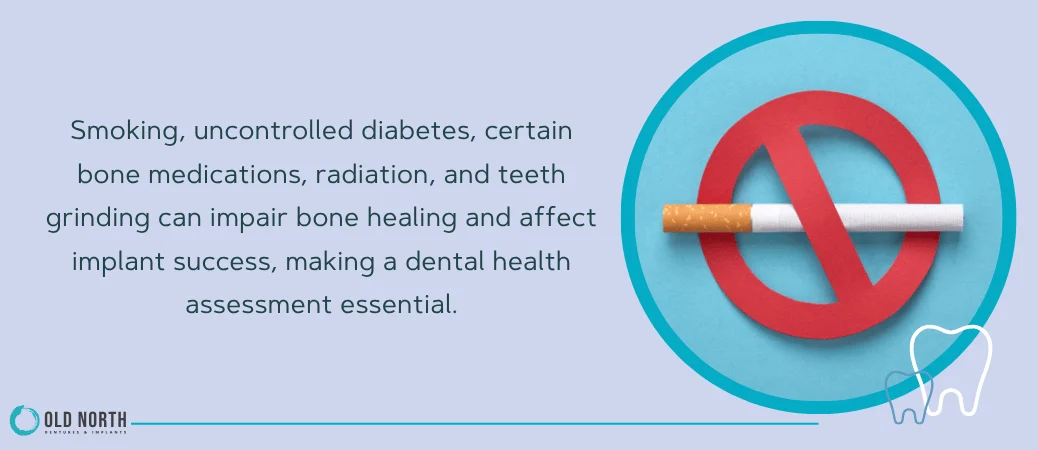
Good bone healing depends on blood flow and a steady immune system. Several things can slow it:
- Smoking or vaping
- Diabetes that isn’t well controlled
- Osteoporosis and some bone medicines, especially IV bisphosphonates
- Past radiation to the head or neck
- Heavy teeth grinding
These health conditions do not always prevent implant treatment, but they may affect healing, surgical risks, and treatment planning.
A failed implant can also contribute to further bone loss, making professional evaluation important.
For patients experiencing complications with existing implants, understanding the available failed dental implant solutions can help them explore ways to address the problem and restore their smile.
A careful health review helps your dentist recommend a suitable treatment approach.
What Should You Ask at a Specialist Consultation?
An oral surgeon or periodontist (a gum and bone specialist) can review complex bone cases. Bring a list of questions:
- Did you take a CBCT scan, and can you show me my bone on it?
- Where is my bone thinnest, and why?
- Can I get an implant without a graft? If not, what kind of graft?
- How long will healing take before I have teeth?
- How often do you perform the procedure you are recommending?
- What happens if the graft or implant doesn’t take?
- What will the full plan cost, including every step?
If two dentists give you different answers, that is common. Their imaging and the techniques they offer can differ.
Finding an Implant Plan That Fits Your Bone
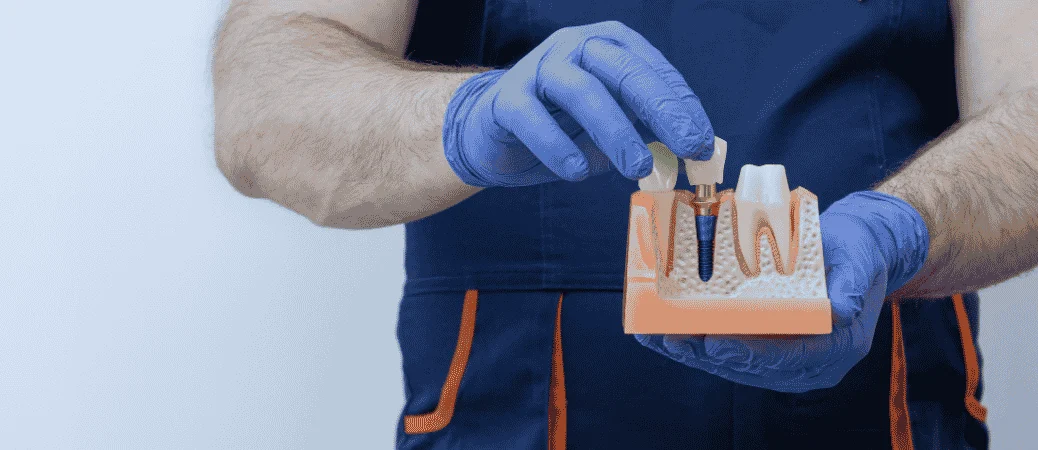
Bone loss changes the path to dental implants, and it rarely closes the door on its own. Your plan depends on 3D measurements, where the thin spots sit, and how well your body heals.
For mild to moderate loss, the answer may be a shorter or angled implant, a graft, or a sinus lift. For severe loss, full-arch designs or specialty implants can help some people, though not everyone is a candidate.
Waiting tends to mean more shrinking, so an early scan keeps more options in front of you.
If you’ve been told you lack enough bone for dental implants, a clinical evaluation and appropriate imaging can help identify your options.
Patients considering a complete arch replacement can also explore who qualifies for full-mouth dental implants to better understand the role of jawbone health, remaining teeth, and overall medical history.
Frequently Asked Questions
Can you get dental implants with 50% bone loss?
Often yes, because a percentage alone does not decide candidacy. What matters is where the loss is and how much height and width remain at each site.
A CBCT scan shows whether you need a graft, angled implants, or another approach.
Can you get lower-jaw implants with significant bone loss?
Many people can. Options include short implants, implants placed in the front area away from the nerve, ridge grafting, or an overdenture held by two to four implants. Cheekbone implants are only used in the upper jaw.
How much does treatment for implants with bone loss cost?
The cost of dental implants with bone loss depends on the severity of bone loss, the number of implants needed, and whether procedures such as bone grafting or a sinus lift are required.
At Old North Dentures and Implants, patients can explore financing options, including CareCredit, Cherry, and Proceed Finance. The practice also reviews applicable insurance benefits and accepts eligible HSA and FSA funds.
A consultation can help you understand the recommended procedures, estimated treatment costs, and available payment arrangements before moving forward.
How long must a bone graft heal before implant placement?
Most grafts heal for about three to six months before an implant goes in. Your gums feel healed within a couple of weeks, but the bone underneath takes longer to mature.
Small grafts can sometimes be placed at the same visit as the implant.
What causes bone loss around an implant after it is placed?
Peri-implantitis is one important cause of bone loss around an existing dental implant. It involves inflammation of the surrounding tissues and progressive loss of supporting bone.
Other possible causes include implant positioning, excessive mechanical stress, and certain healing complications.
Maintaining healthy gums and attending regular dental visits can help protect implants from complications such as peri-implantitis.
Professional dental implant maintenance helps your dental team monitor tissue health, detect changes in bone levels, and address concerns before they become more serious.