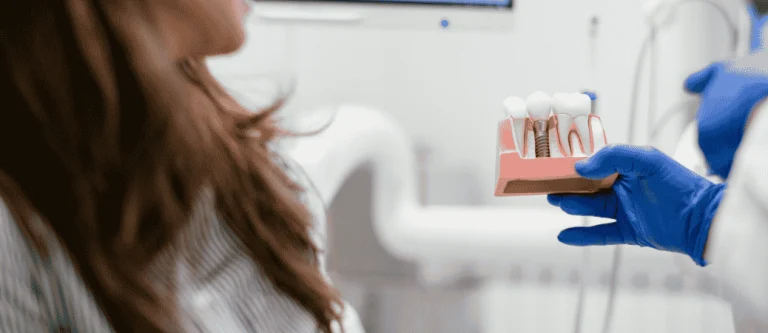


You may wonder if a few dental implants will fix your smile or if you need something more complete. When you deal with many missing, worn, or damaged teeth, a simple fix may not solve the real problem.
Ongoing pain, trouble chewing, or changes in your bite can signal a deeper issue.
You likely need a full mouth reconstruction with implants when you have widespread tooth loss, severe wear, bite problems, or multiple failing restorations that affect how you eat, speak, and live each day.
This type of care rebuilds most or all of your teeth using implants and other treatments to restore strength and function.
If your teeth shift, your face looks sunken, or your jaw feels sore, your mouth may need a full plan instead of single repairs.
Understanding the signs helps you take control and choose the right path for long term health and comfort.
Key Takeaways
- Multiple missing or damaged teeth often require a full treatment plan, not isolated fixes.
- Implants can support a complete rebuild when bite, function, and comfort suffer.
- A detailed exam and custom plan help restore daily function and oral health.
Learn whether you are among the right full mouth dental implants candidates
Table of Content
- Key Signs You May Need Full Mouth Reconstruction with Implants
- Understanding Full Mouth Reconstruction and Implant Solutions
- Common Conditions That Require Comprehensive Dental Restoration
- What to Expect: Diagnosis, Custom Plans, and the Treatment Process
- Benefits and Considerations of Full Mouth Reconstruction with Implants
- Frequently Asked Questions
Key Signs You May Need Full Mouth Reconstruction with Implants
You may need full mouth reconstruction with implants when damage affects most of your teeth, not just one or two.
Ongoing pain, missing teeth, bite problems, and bone loss often point to deeper issues that require a full plan, not quick fixes.
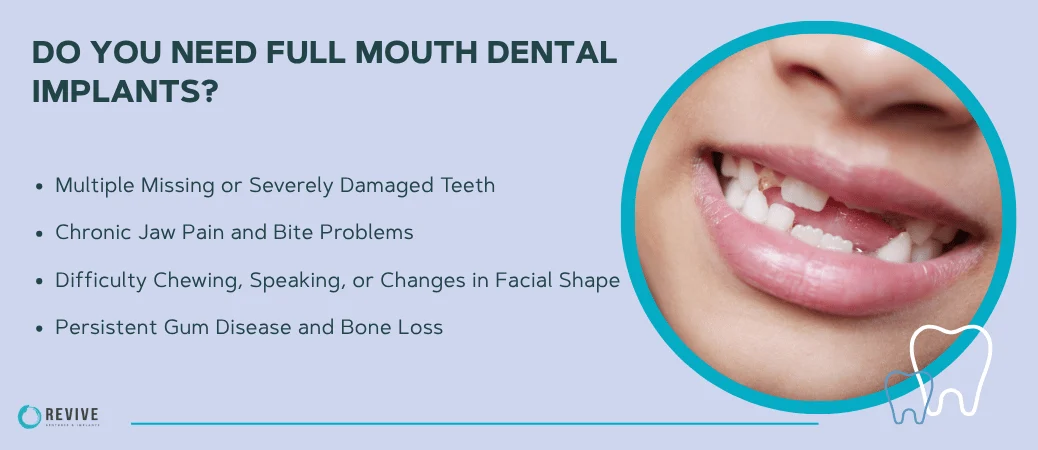
Multiple Missing or Severely Damaged Teeth
If you have multiple missing teeth in different areas, your bite can shift out of place. Nearby teeth may tilt or move into open spaces. This often leads to uneven pressure when you chew.
You may also have several broken teeth, worn teeth, or teeth damaged by acid erosion or bruxism. Grinding and clenching can flatten teeth and shorten them over time.
When this happens across your mouth, simple fillings or crowns may not restore proper height and function.
A full plan that includes all-on-X implants can replace lost teeth and stabilize your bite. Widespread damage usually requires coordinated treatment rather than separate repairs.
Implants act like tooth roots, which helps protect your jawbone and support long-term function.
Chronic Jaw Pain and Bite Problems
Chronic jaw pain is not normal. If you feel soreness in your jaw joints, tight facial muscles, or frequent headaches, your bite may be off.
When teeth are missing or worn down, your upper and lower jaws may not meet evenly. This creates bite issues that strain your jaw joints. Over time, this strain can lead to ongoing discomfort and limited movement.
You might notice clicking, popping, or pain when you open your mouth. These signs often connect to uneven pressure across damaged teeth.
Full mouth reconstruction can reset your bite to a healthier position. By rebuilding worn or missing teeth with implants and restorations, your dentist can spread chewing forces evenly.
This reduces stress on your joints and helps ease long-term jaw pain.
Difficulty Chewing, Speaking, or Changes in Facial Shape
If you avoid certain foods because of difficulty chewing, that is a clear warning sign. Missing or unstable teeth make it hard to break down food, which can affect digestion and nutrition.
Speech can also change. Gaps from lost teeth may cause slurring or trouble pronouncing certain sounds.
Severe tooth wear or multiple missing teeth can even change how your face looks. When teeth lose height from bruxism or erosion, the lower face can appear shorter.
The lips may look thinner, and deep lines can form around the mouth.
A full reconstruction rebuilds lost tooth height and replaces missing teeth with implants. This restores support to your lips and cheeks while improving chewing and speech function.
Persistent Gum Disease and Bone Loss
Ongoing gum disease is a serious problem, especially when it leads to loose teeth. Early gum disease may cause bleeding and swelling.
But advanced gum disease, also called periodontal disease, can destroy the bone that holds your teeth in place.
As bone loss progresses, teeth may shift or fall out. You might notice gaps getting wider or teeth feeling unstable.
When infection and bone loss affect much of your mouth, single treatments may not solve the problem.
In some cases, removing severely damaged teeth and placing implants after treating the infection offers a more stable solution.
Implants can help preserve remaining bone by stimulating it during chewing. A full-mouth approach also allows your dentist to treat gum disease and rebuild your smile in a planned, step-by-step way.
Schedule your consultation in Durham, NC to explore full mouth implant treatment
Understanding Full Mouth Reconstruction and Implant Solutions
Full mouth reconstruction combines restorative treatments to rebuild your bite, teeth, and gum health. Implant solutions often play a key role because they replace missing teeth with strong, fixed support.
What Full Mouth Reconstruction Involves
A full mouth reconstruction, also called full mouth rehabilitation or full mouth restoration, rebuilds most or all of your teeth. Dentists use it when you have severe wear, many missing teeth, bite problems, or major damage.
Your plan may include:
- Dental implants
- Implant-supported bridge
- Crowns and bridges
- Gum treatment
- Tooth extractions
You receive a custom treatment plan based on exams, X-rays, and 3D scans. In many cases, implants anchor the final restorations.
According to this guide on full mouth reconstruction, treatment often combines implants, crowns, bridges, or dentures to repair damage and improve function.
The goal is not cosmetic alone. Your dentist focuses on chewing ability, speech, comfort, and long-term stability.
Treatment may happen in stages. You may need bone grafting before implant placement if your jaw lacks enough bone.
Dental Implants vs. Traditional Dentures
When you compare full-mouth dental implants to dentures, stability makes the biggest difference.
Implants sit in your jawbone. Dentures rest on top of your gums.
Here is a simple comparison:
| Feature | Full Mouth Implants | Traditional Dentures |
| Stability | Fixed in place | Can shift |
| Jawbone support | Helps maintain bone | No bone support |
| Feel | Close to natural teeth | Bulkier |
| Removal | Not removable | Removable |
Full mouth dental implants use titanium posts placed during implant surgery. These posts bond with bone through osseointegration. This process creates a strong base for an implant-supported bridge or fixed arch.
Dentures may cost less upfront, but they can loosen as bone shrinks over time. If you want a solution that feels secure when you eat and speak, implants offer more support.
When Implants Are Necessary
You may need implants as part of full-mouth rehab if you:
- Lost most or all of your teeth
- Have failing crowns and bridges
- Struggle with loose dentures
- Have severe bone loss from missing teeth
Implants become necessary when you need to replace missing teeth in a way that protects your jawbone. When teeth are gone, bone begins to shrink. Dental implants help slow this process by stimulating the bone.
Most full mouth implants use four to eight implants per arch, depending on your bone density and anatomy. This approach supports a full arch of teeth with fewer implants than replacing each tooth individually.
If you want a fixed solution and enough healthy bone supports implant placement, your dentist may recommend implants instead of another set of dentures.
Contact us in Durham, NC to discuss your oral health and implant options
Common Conditions That Require Comprehensive Dental Restoration
You may need more than a single crown or filling when several problems affect your teeth, gums, and bite at the same time.
Severe decay, advanced gum disease, and jaw alignment problems often require a personalized treatment plan that rebuilds your mouth in stages.
Severe Tooth Decay and Failing Restorations
Severe tooth decay can damage large parts of a tooth, not just the surface. When cavities spread deep into the pulp, you may need root canals, crowns, or tooth removal before implant placement.
You might also have failing restorations such as old crowns, bridges, or large fillings. Cracks, loose margins, and decay under existing dental work allow bacteria to grow. This leads to pain, infection, and bone loss.
Common signs include:
- Frequent toothaches
- Dark areas around old fillings
- Broken or chipped crowns
- Teeth that feel weak when you chew
When several teeth show these problems, spot repairs often fail. A full plan may replace damaged teeth with implants and new restorations that work together.
Dentists often combine treatments like crowns and implants in a full-mouth dental restoration to rebuild strength and function across both arches.
Advanced Gum Disease and Required Therapies
Healthy gums support every tooth and implant. If you have advanced gum disease, also called periodontitis, your dentist must treat it before placing implants.
Gum disease can cause:
- Bleeding when brushing
- Gum recession
- Loose teeth
- Bone loss around roots
You may need periodontal therapy, which can include deep cleanings, gum treatment, or gum surgery. In some cases, your dentist may recommend bone grafting to rebuild lost bone.
This stage focuses on stopping infection and creating a stable base. Without proper gum therapy, implants can fail. A comprehensive plan often includes ongoing maintenance visits and strict home care to protect your results.
Jaw Alignment, TMJ, and Bite Correction
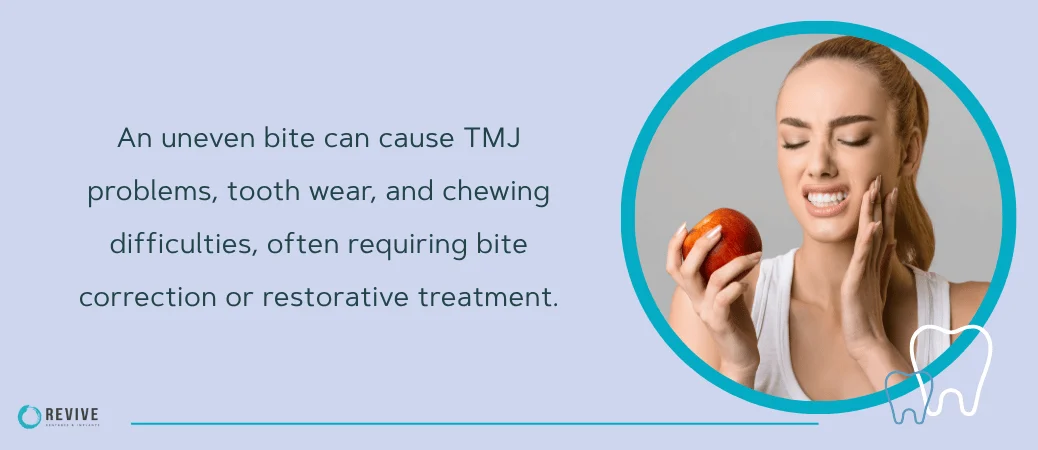
Your teeth must meet evenly when you close your mouth. If your bite is off, you may develop TMJ issues that affect the temporomandibular joint.
You might notice:
- Jaw pain or clicking
- Headaches
- Worn or flattened teeth
- Difficulty chewing
Bite problems can damage new dental work if your dentist does not correct them. Treatment may include bite adjustment, bite correction with crowns, or orthodontic treatment to move teeth into better positions.
In complex cases, your dentist may rebuild your bite from the ground up.
A detailed plan such as full mouth reconstruction can combine orthodontics, implants, and restorations to restore balance and reduce strain on your jaw.
What to Expect: Diagnosis, Custom Plans, and the Treatment Process
You start with a clear diagnosis and a step‑by‑step plan built around your needs. Your dental team studies your teeth, gums, bone, and bite before they recommend implant placement or other procedures.
Comprehensive Dental Examination and Imaging
Your dentist begins with a detailed exam of your teeth, gums, and jaw. They check for bone loss, gum disease, broken teeth, worn enamel, and bite problems.
You will likely get digital X‑rays and a 3D CBCT scan. These images show bone height, bone density, and the location of nerves and sinuses.
This step helps your team decide if you need bone grafting before implant placement.
A prosthodontist or oral surgeon may review your case. Many complex cases involve several dental specialists working together.
This visit gives you clear answers about your current oral health and your options.
Developing Your Customized Treatment Plan
After your exam, your team creates a customized treatment plan. This plan lists each step, the order of care, and the expected recovery time.
Your personalized treatment plan may include:
- Tooth removal
- Bone grafts if you have bone loss
- Implant placement
- Temporary teeth
- Final restorations such as a full arch bridge
A prosthodontist often designs the final teeth. An oral surgeon may place the implants. They work together to restore your smile with stable, long‑lasting results.
Treatment timelines vary. Some cases take a few months. More complex cases can take longer, especially if you need healing after bone grafting.
Phases of Treatment: Surgery to Final Restorations
Your dental treatment plan usually moves in clear phases.
Phase 1: Preparation
You may need deep cleaning, gum treatment, or tooth extractions. If you have bone loss, your surgeon may place bone grafts and allow time for healing.
Phase 2: Implant Placement
Your oral surgeon places titanium implants into your jawbone. Over the next few months, the bone bonds to the implants in a process called osseointegration.
Phase 3: Temporary Teeth
In many cases, you receive temporary teeth so you can eat and smile while healing.
Phase 4: Final Restorations
Your prosthodontist attaches a custom full arch or bridge. These restorations complete your smile makeover and restore your bite strength.
Recovery Time and Long-Term Maintenance
Recovery time depends on your health, bone quality, and the number of implants placed. Most people return to normal daily activity within a few days after surgery.
Swelling and mild discomfort often improve within one to two weeks. Full healing, including bone bonding to the implants, can take several months.
Long‑term success depends on daily care. You must:
- Brush and floss around implants
- Use special cleaning tools if advised
- Attend regular dental visits
Implants can last many years when you maintain good oral hygiene and keep up with checkups. Your dental specialists will monitor your gums and bone levels to protect your restored smile.
Benefits and Considerations of Full Mouth Reconstruction with Implants
Full mouth reconstruction with implants can restore how you chew, speak, and smile. It also requires careful planning around cost, insurance, and the right dental team.
Improved Function, Confidence, and Long-Term Oral Health
When you replace most or all of your teeth with implants, you regain strong biting power. Implants anchor into your jawbone and act like tooth roots. This support helps you chew firm foods and speak clearly.
Unlike removable dentures, full mouth dental implants stay fixed in place and do not shift. You brush and floss them much like natural teeth. That routine supports better daily oral health habits.
Implants also help protect your jawbone. Because they replace tooth roots, they stimulate the bone and reduce bone loss. This can prevent a sunken facial look over time.
From a restorative dentistry view, implants can rebuild your smile in a stable and lasting way. You may feel more confident at work, in social settings, and in photos because your teeth look and feel secure.
Full Mouth Reconstruction Cost and Insurance Factors
The full mouth reconstruction cost depends on several factors:
- Number of implants placed
- Need for bone grafts or extractions
- Type of final bridge or denture
- Location and experience of the provider
A full mouth reconstruction often combines implants, crowns, or bridges into one plan. Because it involves multiple procedures, the total cost can be significant.
Dental insurance may cover parts of the treatment, such as extractions or crowns. Many plans offer limited or no coverage for implants.
You should review your policy and ask your dental office for a written estimate.
Many practices offer payment plans or third‑party financing. Clear cost breakdowns help you plan ahead and avoid surprise bills.
How to Choose the Right Dental Specialist

Full mouth reconstruction requires advanced training. You may work with a prosthodontist, an oral surgeon, or other dental specialists who focus on complex restorative dentistry cases.
A prosthodontist specializes in rebuilding and replacing teeth. For extensive cases, this training can be important.
When choosing a provider, look for:
- Experience with full arch implant cases
- Before‑and‑after photos of real patients
- Clear explanations of risks and benefits
- A written treatment plan with timeline
You should feel comfortable asking questions about healing time, materials used, and long‑term maintenance. The right dental team will focus on your oral health, function, and realistic results; not just appearance.
Frequently Asked Questions
You may wonder which symptoms point to full mouth reconstruction, how dentists choose implants over other options, and what the cost and risks look like.
Clear answers help you decide when to move forward and what to expect from treatment.
What symptoms or dental problems usually mean I might need a full mouth reconstruction?
You may need full mouth reconstruction if most or all of your teeth have serious damage. This can include severe decay, large failing fillings, cracked teeth, or advanced gum disease.
Long-term tooth wear, bite problems, and jaw pain are also warning signs. If fixing one or two teeth will not restore proper function, dentists may suggest a full plan that rebuilds your entire bite.
Missing many teeth is another clear sign. When tooth loss affects how you chew, speak, or feel about your smile, you may need a more complete solution instead of single repairs.
How do dentists determine whether implants are necessary versus crowns, bridges, or dentures?
Your dentist starts with a full exam, digital X-rays, and often 3D scans. They check your bone levels, gum health, and bite alignment.
If a tooth root is healthy, a crown may work. If one or two teeth are missing, a bridge might replace them without surgery.
Implants are often chosen when teeth are missing or cannot be saved. Dentists also look at bone strength and long-term stability when planning care.
Dentures may work if you want a removable option. Implants are fixed in place and can feel more secure, but they require surgery and healing time.
How many dental implants are typically needed to restore a full arch or a full mouth?
You do not always need one implant for each missing tooth. Many full arch cases use four to six implants to support a full set of upper or lower teeth.
Some plans use more implants for added support, especially if your bite force is strong. The exact number depends on your bone quality and the type of bridge used.
What are the biggest downsides or risks of choosing full mouth dental implants?
Full mouth implants require oral surgery. You may have swelling, bruising, or discomfort during healing.
There is also a small risk of infection or implant failure. Smoking, uncontrolled diabetes, and poor oral hygiene increase these risks.
Treatment takes time. Some cases require bone grafts and several months of healing before final teeth are placed.
Cost is another major factor. Full mouth implants usually cost more than dentures or bridges.
How much does full mouth reconstruction usually cost, and what affects the total price?
The total cost depends on how many teeth need work and which procedures you choose. Implants, crowns, bridges, bone grafts, and gum treatment all add to the final price.
Complex cases with bite correction or jaw issues often cost more. The materials used and your location also affect fees.
Is full mouth reconstruction covered by insurance, and what are common ways to pay for it?
Most dental insurance plans cover part of the cost for exams, crowns, or dentures. They often limit or exclude coverage for implants.
You should ask for a written treatment estimate before starting care. Many offices review payment plans and financing options in advance.
Some patients use health savings accounts, flexible spending accounts, or third-party financing. Clear cost planning helps you avoid surprises during treatment.