

Surgical tooth extraction recovery usually takes longer than recovery from a simple extraction because the procedure may involve opening the gums, removing bone, or sectioning the tooth.
Your gums were opened, a little bone may have been removed, and the socket left behind is larger than the one a simple extraction leaves.
That means more swelling, more soreness in the first few days, and a slower slide back toward normal.
Here is the reassuring part: the healing pattern is predictable.
Most people feel the worst of it in the first 48 to 72 hours, notice real improvement after day 3, see the gum surface close over within about two weeks, and finish bone fill quietly over the next 3 to 6 months.
Knowing where you are on that curve makes a sore day much less frightening.
You will be able to tell the difference between soreness that is part of healing and symptoms that need a phone call.
Key Takeaways
- Swelling and pain peak around days 2 to 3, then should steadily improve.
- The gum surface usually closes within two weeks, while bone underneath fills in over months.
- Pain that worsens after day 3, a foul taste, or fever deserves a call to your dental team.
The First 72 Hours: Protect the Clot and Control Swelling
Everything in the first three days comes down to one job: keeping the blood clot in the extraction socket undisturbed.
That clot is the scaffold your body builds new tissue on, and losing it early is what turns an ordinary recovery into a painful one.
Expect your face to look worse before it looks better, and plan your pain medication ahead of the pain rather than chasing it.
What to Expect on Extraction Day and the First Night
Bite firmly on the gauze your surgeon placed for 30 to 45 minutes. Light oozing that tints your saliva pink for several hours is normal.
Steady, bright red bleeding that soaks a fresh gauze pad in under an hour is not.
Numbness from local anesthetic wears off over 2 to 5 hours. Follow the pain management instructions provided by your dental team.
They may recommend over-the-counter or prescription medication based on your procedure, health history, and individual needs.
Use an ice pack on the cheek in 20-minute cycles for the rest of the day. Keep your head propped on an extra pillow overnight.
Avoid completely for 24 hours:
- Straws, spitting, and smoking (suction pulls the clot loose)
- Rinsing or swishing of any kind
- Hot liquids, alcohol, and vigorous exercise
- Poking the site with your tongue or finger
Eat cool, soft foods that need no chewing: yogurt, applesauce, lukewarm broth, smoothies eaten with a spoon.
Why Days 2 and 3 Can Feel Worse Before They Feel Better
Swelling peaks around 48 to 72 hours, so day 2 or day 3 is often when your cheek is puffiest and your jaw feels most stiff.
This is inflammation doing its job, not a sign that something went wrong.
Bruising along the jaw or down the neck can appear now, especially after lower wisdom tooth removal. It fades over a week or so.
You may also notice limited mouth opening, called trismus. Chewing muscles were stretched during the extraction procedure and they protest for a few days.
Keep meals soft and skip anything that needs a wide bite.
Start gentle warm salt water rinses after the first 24 hours: half a teaspoon of salt in a cup of warm water, tipped side to side and let fall out of your mouth. No swishing, no spitting force.
Days 4–14: What Normal Early Socket Healing Looks Like
By day 4, the curve should be pointing downward. Pain eases, swelling recedes, and the socket starts filling with granulation tissue, the soft pinkish-red tissue that replaces the clot and becomes the foundation for new gum and bone.
The site will look strange during this window. Strange is often normal.
Days 4–7: When Pain and Swelling Should Start Improving
Most people drop from prescription-strength discomfort to over-the-counter relief somewhere between days 3 and 5. If you had a complex removal, mild soreness through day 7 is still within range.
Switch from ice to warm compresses starting around day 3. Warmth helps the residual swelling and stiffness clear faster.
Oral hygiene restarts carefully now. Brush your other teeth normally and let the toothbrush stay away from the surgical site until the tissue is less tender.
Rinse with salt water 3 to 4 times a day, especially after meals.
Food can graduate to scrambled eggs, pasta, soft fish, and mashed vegetables. Skip seeds, chips, popcorn, and rice, which lodge in the socket and are miserable to remove.
The dry socket risk window sits mostly between days 2 and 5. Pain that spikes upward during this stretch instead of settling deserves attention.
Days 8–14: Stitches, White Healing Tissue, and a Closing Gumline
Dissolvable stitches loosen and fall out somewhere between days 5 and 14. Do not pull at a dangling one.
If you have non-dissolving sutures, your office will schedule removal around day 7 to 10.
You will likely see a whitish or creamy-yellow film over the socket. That is epithelialization, the new surface layer of gum tissue forming.
It looks like food or pus and is neither. Healthy healing tissue has no bad smell and no throbbing pain with it.
By day 10 to 14, the gum edges have grown toward each other and the opening is noticeably smaller. Jaw stiffness after lower wisdom teeth extraction can hang on for 2 to 3 weeks. Gentle opening stretches a few times a day help.
Most people are eating close to normally by the end of week two after a surgical extraction, though the crater still traps food.
Rinse after meals; a syringe irrigator, if your surgeon gave you one, is worth using exactly as instructed.
Weeks 2–6 and Beyond: Bone Fill, Remodeling, and Tooth Replacement
Soft tissue closure is the visible finish line, and it arrives long before the site is structurally done.
Under the gum, your body is laying down new bone that takes months to mature.
That gap between “looks healed” and “is healed” is the single most misunderstood part of tooth extraction recovery.
Why the Surface Can Look Healed Before the Bone Is Ready
By week 3 or 4, the gum has usually covered the socket and you may forget the extraction happened. Beneath it, the socket is only partly filled with immature woven bone.
Bone fill and remodeling continue for 3 to 6 months, and the ridge slowly changes shape as it settles. You will feel none of it.
A small dip or indentation in the gumline where the tooth used to be is common and permanent to some degree.
The jaw narrows a bit once a tooth root no longer stimulates it.
This is why waiting a long time before replacing a tooth can complicate later treatment, one of several risks of putting off an extraction and its follow-up care.
If you plan to replace the tooth, your surgeon may have placed a socket preservation graft at the time of removal to hold the ridge shape.
Bone grafting adds its own 3 to 6 month integration period before the site is implant-ready.
When to Discuss Dental Implants or Other Replacement Options
Bring up replacement at your post-op check, even if the procedure is months away. Timing decisions are easier to make while the site is fresh.
Possible timing ranges may look like this, but your treatment timeline depends on healing, bone health, infection, grafting, and the type of tooth replacement planned:
| Replacement path | Usual wait after extraction | Notes |
| Immediate implant | Same day | Needs healthy bone and no active infection |
| Delayed implant | 3 to 6 months | Most common for surgical extraction sites |
| Implant after grafting | 4 to 6 months post-graft | Adds a healing phase |
| Bridge or partial denture | 6 to 8 weeks | Waits for soft tissue to stabilize |
A single tooth dental implant replaces both root and crown, which helps preserve the bone that would otherwise shrink. For several missing teeth, options range from full arch implant solutions to dentures.
Not every extraction needs replacing. Wisdom teeth almost never do.
Why a Surgical Extraction Has a Different Recovery
Your recovery is longer because the wound is bigger. A surgical extraction involves lifting a gum flap, and often removing a small amount of bone or cutting the tooth into pieces to get it out.
More tissue disturbed means more inflammation, more swelling, and a socket that takes more time to fill.

Simple vs. Surgical Extraction: What Changes in the Healing Process
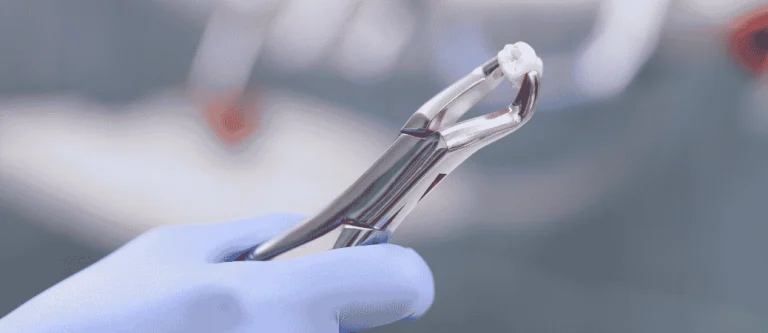
A simple extraction removes a fully erupted tooth with forceps. The socket is the shape of the root and nothing else is cut.
| Simple extraction | Surgical extraction | |
| Gum incision | No | Yes |
| Bone removal | Rare | Common |
| Stitches | Usually none | Usually yes |
| Peak swelling | Mild, day 1 to 2 | Moderate, day 2 to 3 |
| Back to normal eating | 7 to 10 days | 2 to 3 weeks |
| Soft tissue closure | 1 to 2 weeks | 2 to 4 weeks |
Bone healing runs on the same 3 to 6 month clock either way. The difference shows up in the first month.
Impacted Teeth, Sedation, and Other Factors That Affect Recovery
Impacted wisdom teeth, especially lower ones angled into bone, produce the most swelling and the stiffest jaws.
Wisdom teeth removal that requires sectioning the tooth adds a few days to the timeline compared with an erupted molar.
Other things that stretch recovery:
- Smoking or vaping, which delays healing and multiplies dry socket risk
- Diabetes and other conditions that slow tissue repair
- Age over 35, which is associated with denser bone and longer healing
- Multiple extractions in one visit
- Active infection or deep tooth decay at the time of removal
The anesthesia you had affects your first day more than your overall healing. Local anesthetic alone means you go home alert.
With IV sedation or general anesthesia, plan on grogginess, no driving, and an adult with you for 24 hours. Sedation dentistry does not change how the socket heals.
When Pain or Delayed Healing Needs a Call to Your Dentist
The pattern to watch is direction, not intensity. Soreness that shrinks a little every day is fine. Pain that flattens out or climbs after day 3 is your signal to call.
Two problems account for most of those calls: dry socket and infection.
Dry Socket Red Flags vs. Normal Post-Operative Soreness
Dry socket, or alveolar osteitis, happens when the clot dislodges or breaks down early and leaves bone exposed. It shows up most often on days 3 through 5, right when you expected to feel better.
Signs it is dry socket:
- Deep, throbbing pain that radiates to the ear, temple, or neck
- Pain that ignores over-the-counter medication
- A visibly empty socket, sometimes with whitish bone at the bottom
- Foul odor or a persistent bad taste
Signs it is normal soreness:
- Ache that responds to ibuprofen
- Tenderness only when you touch or chew near the site
- A white film over tissue that has no smell
- Steady improvement day over day
Dry socket is treatable. Your dentist can clean the area and may place a medicated dressing to help manage discomfort while the socket heals.
Avoiding straws, smoking, and forceful spitting through day 5 is the best prevention you have.
Signs of Infection and Symptoms That Need Urgent Care
Contact your dental team promptly if you develop fever, pus, worsening or spreading swelling, persistent bleeding, or numbness that does not improve as expected.
Difficulty breathing or swallowing requires immediate medical attention.
Go to an emergency room immediately for difficulty breathing or swallowing, or an inability to open your mouth more than a finger’s width.
Also call for bleeding that soaks gauze after 24 hours, numbness in your lip or tongue lasting beyond 24 hours, or a hard piece pushing through the gum, which is often a small bone fragment working its way out.
If you are unsure whether your symptoms count, contact Old North Dentures and Implants or review these signs you need an emergency dentist.
A Smooth Surgical Recovery Depends on Steady Progress and Good Aftercare

Your recovery from a surgical tooth extraction should improve a little each day after the 72-hour peak.
Protect the clot hard for the first three days, rinse gently with salt water afterward, keep food soft while the socket is open, and give the jaw time to loosen up.
Expect the gum to close in about two weeks and the bone to fill quietly for months after that. If you are planning a replacement tooth, start that conversation early so the timing works with your healing.
When pain climbs instead of fading, when a bad taste sets in, or when something just feels off, call the office that performed your extraction.
The team at Old North Dentures and Implants would rather look at a healing socket that turns out fine than have you wait out a problem at home.
Frequently Asked Questions
How long does it take to recover from a surgical tooth extraction?
Most people feel largely normal in 2 to 3 weeks, with the gum surface closing over the socket in that same window. Bone fill inside the socket continues for 3 to 6 months, though you will not feel it happening.
Is it normal for pain to continue 7 days after a surgical extraction?
Mild soreness at day 7 is normal after a surgical extraction, especially with impacted lower wisdom teeth.
Pain that is severe, throbbing, or worse than it was on day 4 is not normal and should be evaluated for dry socket or infection.
What is the white or yellow material in my extraction socket?
That whitish layer is new gum tissue forming over the wound, part of a process called epithelialization.
Healthy healing tissue has no foul smell and no sharp pain with it; if you notice a bad taste, odor, or pus, call your dentist.
When can I eat normal food after surgical wisdom tooth removal?
Most people return to a fairly normal diet around 2 weeks after surgical wisdom tooth removal, though the socket keeps trapping food a while longer.
Hold off on nuts, popcorn, chips, and rice until the site has closed, and rinse with warm salt water after meals.
How do I know if I have dry socket after a surgical extraction?
Dry socket usually shows up on days 3 to 5 as deep throbbing pain that spreads to the ear or temple and does not respond to over-the-counter medication.
A bad taste, a foul odor, and an empty-looking socket with visible bone at the bottom are the other giveaways.