


You expected your dental implant to last for years. Now it feels loose, painful, or swollen, and you want to know what went wrong.
Dental implant failure can happen early after surgery or years later, even when you take good care of your mouth.
Your dental implant likely failed because it did not bond well with your jawbone or because infection, pressure, or health issues damaged the bone around it, but your dentist can often treat the problem and help restore your smile.
You may notice pain, movement, gum swelling, or trouble chewing. These signs mean it’s a dental emergency and you should act fast.
When you understand the cause, you can choose the right next step. In many cases, your dentist can remove the implant, treat the area, and place a new one after healing.
With the right care and plan, you can protect your dental implants and move forward with confidence.
Key Takeaways
- Dental implant failure can happen early or years later due to poor bonding, infection, or pressure.
- Warning signs like pain, swelling, or looseness need quick dental care.
- Treatment can remove the failed implant and help restore your smile.
Explore failed dental implant solutions and take the first step toward restoring your smile
Recognizing the Signs of Dental Implant Failure
Dental implants should feel stable and comfortable, much like natural teeth. When you notice pain, movement, swelling, or changes in your bite, your body may be signaling early signs of dental implant failure.
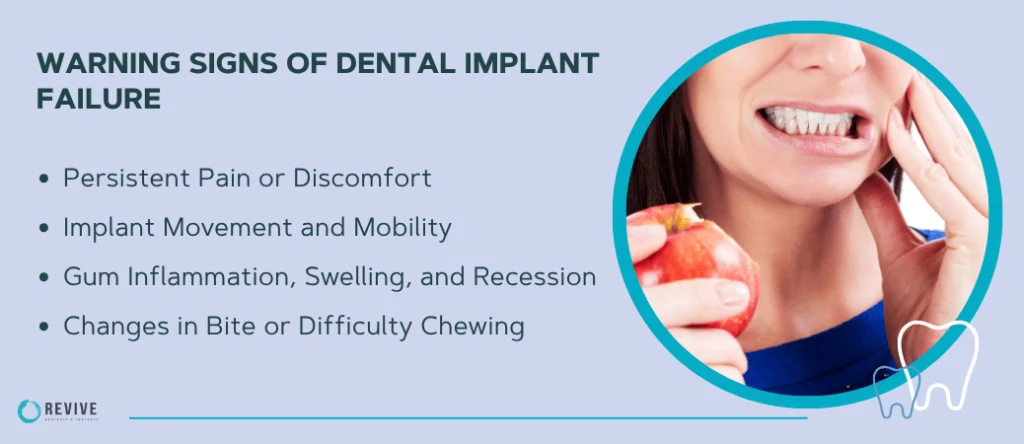
Persistent Pain or Discomfort
You may feel mild soreness after implant surgery. That discomfort should improve within days or weeks. If pain continues or gets worse months later, pay attention.
Ongoing pain can point to infection, nerve irritation, or failed bonding between the implant and your jawbone. Some people feel a dull ache. Others notice sharp pain when they bite down.
Watch for pain that:
- Does not improve with time
- Returns after healing seemed complete
- Gets worse when chewing
- Comes with swelling or warmth
A failing implant may also hurt if bone did not attach to the metal post. This process, called bonding or integration, must happen for long-term stability. If it fails, discomfort often follows.
Do not ignore persistent pain. Early treatment can prevent more bone loss and reduce damage around the implant.
Implant Movement and Mobility
A healthy implant should not move at all. Even slight implant movement is a warning sign.
You might first notice a small shift when you press on it with your tongue. Over time, the implant may feel clearly unstable. A loose dental implant often means the bone did not bond properly or has started to break down.
Common signs of implant mobility include:
| Sign | What It Means |
| Implant feels loose | Possible bone loss |
| Clicking sensation | Implant loosening |
| Movement while chewing | Failed integration |
| Visible gap near gumline | Structural problem |
According to Colgate’s overview of signs of a failed dental implant, mobility is one of the clearest indicators that the implant has not integrated with the bone.
If your implant is loose, contact your dentist right away. Waiting can lead to more bone damage and a more complex repair.
Gum Inflammation, Swelling, and Recession
Healthy gums should look pink and firm around your implant. Redness, gum inflammation, or bleeding are not normal.
You may notice:
- Swelling around the implant
- Tender gums
- Pus or discharge
- Bad taste in your mouth
These symptoms may signal infection around the implant. Some people develop a condition called peri-implantitis, which can destroy bone if untreated.
Gum recession is another warning sign. If the gum pulls away and exposes part of the metal post, bacteria can collect in that space. This increases the risk of bone loss.
Prompt treatment can control infection and protect the surrounding tissue.
Changes in Bite or Difficulty Chewing
Your implant should fit comfortably with your other teeth. If your bite feels uneven, something may have shifted.
You might notice:
- Difficulty chewing hard foods
- Pressure pain when biting
- A feeling that your teeth no longer line up
- Jaw fatigue on one side
When an implant becomes loose or the crown shifts, your bite can change. Even small changes can strain nearby teeth and jaw joints.
A loose or unstable implant may also move slightly under pressure. That movement can make chewing feel awkward or painful.
If chewing feels different than it did before, schedule an exam. Your dentist can check for implant loosening, bone loss, or crown problems before the issue worsens.
Contact us in Durham, NC to discuss your dental implant concerns with our team
Common Causes of Dental Implant Failure
Dental implant failure can happen soon after implant surgery or years later. The most common causes include infection, bone problems, poor oral care, and too much pressure on the implant.
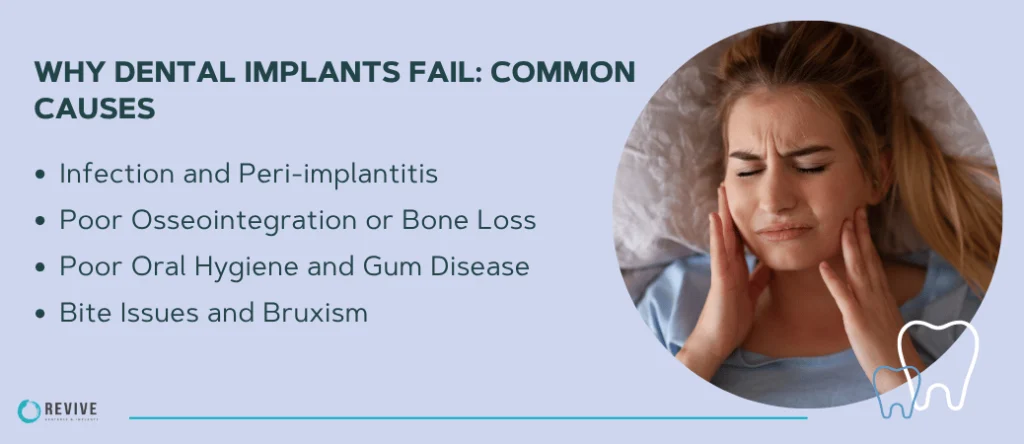
Infection and Peri-implantitis
Infection is one of the leading causes of dental implant failure. Bacteria can build up around the implant and infect the gum and bone.
When this infection affects the tissue around the implant, dentists call it peri-implantitis. It can cause swelling, bleeding, bad breath, and bone loss around the implant.
If you ignore these signs, the implant can loosen and fail.
Early implant failure often links to infection soon after surgery. Late dental implant failure often connects to untreated peri-implantitis months or years later.
Infection is one of the most common and preventable causes of dental implant failure.
You reduce your risk by keeping the area clean and attending regular dental visits. Quick treatment can stop bone damage before it becomes severe.
Poor Osseointegration or Bone Loss
Your implant must bond tightly with your jawbone. This process is called osseointegration.
If this bond does not form well, the implant may feel loose. Dentists call this poor osseointegration, and it is a major cause of early implant failure.
Problems during implant surgery, low bone quality, or movement during healing can prevent proper bonding.
Insufficient bone density also raises your risk. If you have bone loss from missing teeth or gum disease, your dentist may suggest bone grafting or a sinus lift before placing the implant.
Late dental implant failure can also happen if bone loss develops over time. Ongoing bone loss weakens support and can make the implant unstable.
Poor Oral Hygiene and Gum Disease
Poor oral hygiene allows plaque and bacteria to collect around your implant. This increases your risk of gum disease and peri-implantitis.
Even though an implant cannot get a cavity, the surrounding gum and bone can still get infected. If you do not brush and floss well, inflammation can develop. Over time, this can lead to bone loss and implant failure.
If you already have gum disease, your risk is higher. You need healthy gums before and after implant surgery. Dentists often stress the link between oral hygiene and dental implant failure causes and solutions.
Daily brushing, flossing, and professional cleanings protect the bone that holds your implant in place.
Bite Issues and Bruxism
Too much pressure on your implant can cause damage. This includes excessive bite pressure from a misaligned bite or poorly placed crown.
If your teeth do not meet evenly, certain areas take more force. Over time, this stress can loosen the implant or cause tiny fractures in the surrounding bone.
Bruxism, or teeth grinding, is another major risk. Grinding often happens at night, and you may not know you do it. The repeated force can overload the implant and lead to late dental implant failure.
Dentists often list mechanical stress among the main common causes of dental implant failure.
If you grind your teeth, your dentist may recommend a custom night guard. Adjusting your bite can also lower stress and protect your implant long term.
Get trusted failed dental implant solutions designed to restore comfort, function, and confidence
Types and Timing of Dental Implant Failure
Dental implants can fail soon after surgery or years later. The timing often points to the cause, which helps your dentist decide the right fix.
Early vs. Late Implant Failure
Early implant failure happens in the first few months after placement. The implant does not bond to your jawbone the way it should. Dentists call this a failure of osseointegration.
In most cases, infection or poor bone quality plays a role. Bacteria around the site can lead to bone loss, often described in research on peri-implantitis and implant failure causes.
Smoking, uncontrolled diabetes, and heavy pressure on the implant can also raise your risk.
Late implant failure develops after the implant has healed and worked well for a period of time. This can happen years later. You may notice pain, swelling, gum recession, or that the implant feels loose.
Late dental implant failure often links to infection, bone loss, or too much bite force over time. Ongoing gum disease and poor cleaning habits increase your risk.
If you have an implant-supported bridge, uneven pressure across several implants can also lead to problems.
Short-Term and Long-Term Complications
Short-term complications usually appear within days or weeks of surgery. You might feel ongoing pain, see swelling that does not improve, or notice movement in the implant.
These signs can point to a failed dental implant that never fully stabilized.
In many cases, treatment involves removing the implant to prevent deeper infection. After healing, you may be able to try again with bone grafting or a different plan.
Long-term complications develop slowly. Bone loss around the implant, gum recession, and chronic infection can weaken support over time.
You may also see problems with the crown or implant-supported bridge, such as screw loosening or fracture.
Regular checkups and X-rays help catch these issues early. Acting fast gives you more options and protects the bone you still have.
What to Do When Your Dental Implant Fails
Act quickly if your implant feels loose, painful, or swollen. Early care can limit damage to your gums and bone and improve your options for repair or replacement.
When to Contact Your Dentist
Call your dentist as soon as you notice persistent pain, swelling, bleeding, or a loose implant. Mild soreness is normal for a few days after surgery. Pain that lasts more than a week or gets worse needs attention.
Other warning signs include:
- Trouble chewing or speaking
- Pus or discharge near the implant
- Bad breath that does not go away
- Numbness or tingling
These symptoms can point to infection or poor bonding with the jawbone. Peri‑implant disease is a common cause of failure.
Do not try to tighten or adjust the implant yourself. Only a dental professional should handle it. Quick treatment may allow your dentist to clean the area, adjust the crown, or treat infection before bone loss gets worse.
Initial Steps to Take at Home
While you wait for your appointment, protect the area. Avoid chewing on the side of the failed implant. Eat soft foods like yogurt, eggs, or soup.
Keep your mouth clean. Brush gently with a soft toothbrush and floss carefully. If your dentist gave you aftercare instructions or a medicated rinse, follow them closely.
You can also:
- Rinse with warm salt water to reduce bacteria
- Use an over‑the‑counter pain reliever if your dentist has approved it
- Avoid touching the implant with your tongue or fingers
Do not ignore the problem. Many cases require removal of the implant to prevent infection from spreading. Early action protects your surrounding teeth and bone.
Quit Smoking and Manage Health Conditions
Your body needs strong blood flow and healthy bone to support an implant. Smoking slows healing and raises your risk of infection. If you smoke, make a clear plan to quit smoking now. Even cutting back can help while you heal.
You also need to manage health conditions that affect healing. These include:
- Uncontrolled diabetes
- Osteoporosis
- Autoimmune diseases
- Ongoing gum disease
Work with your primary doctor to keep blood sugar stable and medications adjusted. Tell your dentist about any changes in your health history.
When you manage health conditions well, you give your next implant the best chance to bond with your jawbone and stay stable for years.
Importance of Follow-up Appointments
Follow-up appointments are not optional. They allow your dentist to check bone healing, gum health, and implant stability.
At these visits, your dentist may:
- Take X‑rays to check bone levels
- Clean around the implant
- Adjust the crown or bite
- Review your daily care routine
If the implant must be removed, your dentist will plan the next steps. This may include bone grafting and a healing period before placing a new implant.
Keep every scheduled visit, even if you feel fine. Small problems often show up on exams before you notice symptoms. Regular follow-up appointments protect your investment and help prevent another failure.
Treatment and Restoration Options After Implant Failure
You have several clear paths after an implant fails. Your dentist may remove and replace the implant, rebuild lost bone, treat infection, or guide you toward another type of dental restoration.
Implant Removal and Replacement
If the implant feels loose, causes pain, or shows bone loss on X-rays, your dentist will likely start with implant removal. They numb the area and gently remove the failed post to protect nearby bone and teeth.
After healing, you may qualify for implant removal and replacement. In some cases, your dentist can place an implant replacement the same day. In others, you wait a few months to allow the site to heal.
Replacement may involve:
- A wider or longer implant
- A different implant surface
- Changes in bite alignment
A review of management options explains that dentists may replace the implant right away or use a staged approach depending on bone loss and stability.
Your dentist will check bone support, gum health, and bite pressure before moving forward.
Bone Graft and Sinus Lift Procedures
If you lost bone around the failed implant, you may need a bone graft before placing a new one. Bone grafting rebuilds the jaw so it can support a stable implant.
Your dentist may use:
- Your own bone
- Donor bone
- Synthetic graft material
The graft acts as a framework. Your body slowly replaces it with natural bone over several months.
If the failed implant was in your upper back jaw, you might also need a sinus lift. This procedure raises the sinus membrane and adds bone below it. It creates enough height to hold a new implant securely.
Your dentist will use 3D scans to measure bone width and height. These images help plan safe implant replacement and lower the risk of another failure.
Treating Peri-implantitis and Infection
In some cases, infection caused the failure. This condition, called peri-implantitis, leads to gum inflammation and bone loss around the implant.
Treatment focuses on stopping the infection and protecting your remaining bone. Your dentist may use:
- Deep cleaning around the implant site
- Antibacterial rinses
- Antibiotic therapy
- Minor surgery to remove infected tissue
If you delay care, infection can spread and damage nearby teeth. Leaving a failed implant in place may increase bone loss and other problems, which is why prompt care matters.
Early treatment improves your chances of successful implant replacement later.
Alternative Dental Restorations
If you are not a good candidate for another implant, you still have reliable options. Your dentist can recommend a different dental prosthetic that restores function and appearance.
Common choices include:
| Option | How It Works | Best For |
| Dental bridge | Anchors to nearby teeth | One missing tooth |
| Dentures | Removable appliance | Multiple missing teeth |
| Implant-supported denture | Clips onto implants | Full arch support |
A traditional dental bridge does not require surgery, but it relies on neighboring teeth for support. Dentures cost less upfront but may feel less stable.
Your dentist will review your bone level, gum health, budget, and long-term goals before recommending the right dental restoration for you.
How to Prevent Dental Implant Failure in the Future
You can lower your risk of future problems by keeping your mouth clean, reducing stress on the implant, and seeing your dentist on a regular schedule. Small daily habits and consistent follow-up care make a real difference.
Oral Hygiene and Professional Care

Strong oral hygiene habits protect the gum and bone around your implant. Plaque can still build up on crowns and along the gumline.
If you allow poor oral hygiene to continue, bacteria can irritate the tissue and lead to infection.
Brush at least twice a day with a soft toothbrush. Clean along the gumline with small, gentle circles.
Floss once a day. You can also use floss threaders, interdental brushes, or a water flosser to clean around the implant post.
Follow all aftercare instructions from your surgeon, especially during the first few months. Early healing helps the bone bond tightly to the implant.
Keep your regular cleanings. Professional care helps prevent problems like gum inflammation that may lead to dental implant failure.
Protecting Implants From Bite Forces
Too much pressure can loosen or damage an implant. This often happens if you have bruxism, also called teeth grinding.
Grinding places repeated force on the implant and may disrupt healing. Over time, it can weaken the bond between the bone and the implant.
If you grind your teeth at night, ask your dentist about a custom night guard. This clear appliance spreads out pressure and protects both natural teeth and implants.
Avoid chewing hard items like ice, hard candy, or pen caps. These habits add stress to the crown and abutment.
If your bite feels uneven, tell your dentist. A small adjustment can reduce pressure and help prevent dental implant failure.
Monitoring and Maintenance
Regular follow-up appointments allow your dentist to catch small issues early. You may not feel pain at first, even if there is inflammation or bone loss.
Your dentist will check:
- Implant stability
- Gum health around the implant
- Your bite alignment
- X-rays for bone support
These visits are not optional. They help you protect the time and money you invested in your implant.
Call your dentist if you notice swelling, bleeding gums, or a loose feeling. Quick action can stop a minor issue from turning into a larger problem.
Frequently Asked Questions
Dental implants can fail for different reasons, from infection to bone loss. Knowing the warning signs and your next steps helps you act fast and protect your oral health.
What are the early warning signs that a dental implant may be failing?
You may notice red, swollen, or bleeding gums around the implant. Pain when you chew or touch the area can also signal a problem.
If the implant or crown feels loose, that is a serious warning sign. A moving implant often means it did not bond well with the jawbone.
What should I do right away if I think my dental implant has failed?
Call your dentist as soon as you notice pain, swelling, or movement. Do not wait for it to get worse.
Avoid chewing on that side of your mouth. Keep the area clean, but do not press or poke the implant.
Your dentist may take X-rays to check the bone and look for infection. Quick action can prevent more bone loss and damage.
Can a failed dental implant be saved, or does it always need to be removed?
In many cases, your dentist must remove a failed implant. Leaving it in place can lead to infection and bone loss.
Some minor problems, like gum inflammation, may improve with deep cleaning and medication. But if the implant is loose, removal is often the safest option.
Can a dental implant be redone after it fails, and how long should I wait?
Yes, you can often try again after the area heals. Your dentist will first treat the cause of the failure.
Healing may take several months. In many cases, you may need to wait up to six months for the bone and gums to recover.
If you lost bone, you might need a bone graft before placing a new implant. Your dentist will check your healing with exams and imaging before moving forward.
What treatment options are available to replace a worn or failed dental implant?
After removal, your dentist may place a new implant once the site heals. This works well if you have enough healthy bone.
If bone loss is severe or you are not a good candidate for another implant, you may choose a dental bridge or a removable denture. Each option restores function and improves your ability to chew.
Your dentist will review your health history, bone levels, and budget before recommending the best plan.
Who is usually responsible when a dental implant fails, and can I get a refund?
Implants have a high success rate, but they can still fail. Smoking, poor oral hygiene, gum disease, or certain medical conditions often play a role.
In rare cases, errors like poor planning or lack of follow-up care may contribute to failure. When this happens, you may discuss partial refunds or corrective treatment with the dental office.
If you believe your dentist did not meet the standard of care, you can speak with a malpractice attorney to review your options.