Same-day dental implants let you walk out of the dental office with new teeth on the same day as your implant surgery.
Instead of waiting months between appointments, this approach combines implant placement and temporary tooth attachment into a single visit.
This can be an appealing option if you need to replace missing or damaged teeth quickly.
Ideal candidates for same-day dental implants typically have sufficient jawbone density, healthy gums, good overall health, and no active gum disease.[1]
Your dentist will need to evaluate your mouth using 3D imaging to see if your bone can support immediate implant placement.
Factors like smoking, certain medications, and existing oral health problems can affect whether you qualify for this same-day dental implant procedure.
Not everyone is a candidate for same-day implants right away. Some patients need preliminary treatment like bone grafting or gum disease therapy before moving forward.
Understanding who qualifies and what the process involves can help you decide if same-day dental implants are the right choice for your situation.
Key Takeaways
- Same-day dental implants require adequate bone density, healthy gums, and stable overall health for successful placement
- The procedure involves placing the implant and temporary restoration in one visit, with final teeth added after healing
- Costs vary based on individual needs, and proper maintenance is essential for long-term implant success
Learn about same day dental implants candidacy and explore your tooth replacement options
Eligibility Criteria for Same-Day Dental Implants
Not everyone qualifies for same-day dental implants because the procedure requires specific health conditions to succeed.
Your jawbone density, gum health, overall medical status, and ability to follow aftercare instructions all play a role in determining if you’re a good candidate.
Bone Density and Jawbone Health
Your jawbone needs to be strong enough to support an implant right away. Bone quality and volume determine whether your implant dentist can achieve the initial stability needed for same-day treatment.
Dentists measure something called insertion torque during placement. This tells them how firmly the implant sits in your bone.
For same-day implants, the implant needs to reach 30-40 Newton-centimeters of torque to be stable enough for a temporary crown.
If you’ve been missing teeth for a long time, your jawbone may have shrunk. Bone loss happens naturally when teeth are gone because the jawbone isn’t being stimulated anymore.
In these cases, you might need a bone graft before getting implants.
Your dentist will use 3D imaging to check your jawbone density before making a treatment plan. This scan shows exactly how much bone you have and where it’s located.
If your bone is too soft or there isn’t enough of it, delayed loading may be safer than same-day placement.
Gum Health and Absence of Active Infection
Healthy gums are required for same-day implants to work properly. Active infection at the implant site is a major reason dentists delay the procedure.
Signs of gum problems that may disqualify you include:
- Red, swollen, or bleeding gums
- Pockets between your teeth and gums
- Persistent bad breath or bad taste
- Loose teeth or teeth that have shifted
Periodontal disease needs to be treated and controlled before implant placement. This gum disease destroys the bone and tissue that hold your teeth in place. If you have it, your dentist will need to get it under control first.
Good oral hygiene shows your dentist you can keep the implant site clean during healing. Your oral health history matters because it predicts how well you’ll care for your new implants.
Overall Medical Considerations
Your general health affects whether you can heal properly after implant surgery. Certain medical conditions and medications can slow down healing or increase the risk of complications.
Conditions that may affect eligibility:
| Condition | Impact on Same-Day Implants |
| Uncontrolled diabetes | Slows healing and bone integration |
| Autoimmune disorders | May affect bone quality and healing |
| Blood clotting disorders | Increases surgical bleeding risk |
| Active cancer treatment | Weakens immune system and healing |
Some medications can interfere with bone healing. Blood thinners may need to be adjusted before surgery. Bisphosphonates, used for osteoporosis, can affect your jawbone’s ability to heal around implants.
Smoking significantly reduces your chances of success. It restricts blood flow to your gums and slows down the healing process. Many dentists require patients to quit smoking before approving them for same-day implants.
Your age itself isn’t usually a barrier. However, your overall medical condition and bone health matter more than the number on your birthday.
Lifestyle and Compliance with Aftercare
You need to commit to following strict instructions after getting same-day implants. The temporary teeth you get on the same day are provisional, and you must protect them while your bone heals around the implants.
Aftercare requirements include:
- Eating only soft foods for several weeks
- Avoiding chewing on the implant side
- Keeping the area very clean
- Attending all follow-up appointments
- Not smoking or using tobacco products
You’ll need to change your diet right after surgery. Hard, crunchy, or sticky foods can put too much pressure on new implants. This pressure can prevent the bone from fusing properly to the implant.
Your oral hygiene routine becomes even more important. You must brush carefully around the implants and follow any special cleaning instructions. Missing these steps can lead to infection or implant failure.
Most people need to take time off work for the procedure and initial recovery. You should plan for at least one full day, though some people need more depending on their job.
Physical activities may need to be limited for a few days to prevent complications.
Schedule your consultation in Durham, NC to find out if you qualify for same-day dental implants
How Same-Day Implants Differ from Traditional Approaches
Same-day implants let you walk out with a temporary tooth on the same day as your implant placement, while traditional dental implants require you to wait several months between steps.
The key differences between same-day and traditional approaches involve timing, healing requirements, and how quickly you get functional teeth.
Immediate Loading vs Healing Phase
With immediate loading, your dentist attaches a temporary crown to your implant right after placing it in your jawbone. You get a functional tooth the same day without waiting for the healing phase to finish.
Traditional implants work differently. After your dentist places the implant, you’ll wait three to six months while the implant fuses with your bone through a process called osseointegration.
During this healing phase, you might wear a temporary removable denture or bridge.
The immediate-load implants provide same-day functional restorations in just one visit. This means you don’t have to go without teeth or make multiple trips to the dentist over several months.
However, immediate loading only works if you have enough healthy bone and the implant achieves strong initial stability during placement.
Implant Placement and Temporary Restorations
Same-day procedures often combine tooth extraction and implant placement in one appointment.
Your dentist removes your damaged tooth, places the implant in the socket, and attaches a temporary restoration before you leave.
The temporary tooth looks natural but is designed to bear less pressure than your final crown. You’ll need to eat soft foods and avoid chewing directly on it for the first few weeks while healing occurs underneath.
Traditional approaches separate these steps. You might have your tooth extracted weeks or months before implant placement. Then you wait again before receiving your permanent crown.
This staged approach gives your gums and bone more time to heal between procedures, which can improve success rates in complex cases.
Same-Day vs Traditional Timeline
The “teeth in a day” approach condenses your entire implant procedure into one or two appointments. You leave with a temporary tooth on day one and return months later for your permanent crown once healing is complete.
Traditional implants follow a timeline spanning several months. First appointment: tooth extraction. Second appointment (weeks later): implant placement.
Third appointment (three to six months later): permanent crown attachment. Some cases require even more visits for bone grafting or other preparatory work.
Timeline Comparison:
| Approach | Initial Visit | Temporary Tooth | Final Crown |
| Same-Day | Extraction + implant + temporary | Same day | 3-6 months later |
| Traditional | Extraction only | Removable option | 6-9 months total |
Your lifestyle and schedule play a big role in choosing between these options. Same-day implants mean fewer appointments and less time off work, but they require specific bone and health conditions to succeed.
Contact us in Durham, NC to discuss your implant eligibility with our dental team
Benefits and Potential Risks of Fast-Track Implant Solutions
Same-day dental implants offer speed and convenience, but they also come with specific requirements and considerations.
Understanding both the advantages and potential complications helps you make the right choice for your dental health.
Advantages of Same-Day Treatments

The biggest benefit of same-day implants is getting your tooth replaced in just one appointment. You walk in with a missing or damaged tooth and leave with an immediate smile restoration in place.
This means fewer dental visits and less time away from work or daily activities.
The treatment process combines tooth extraction and implant placement into one procedure. Your dentist places the implant post directly into the socket after removing the damaged tooth.
This approach can actually help prevent bone loss that normally happens after extraction.
You’ll receive a temporary crown on the same day as your implant surgery. While this temporary restoration isn’t as strong as your final restoration, it looks natural and lets you eat soft foods right away.
Many patients appreciate not having to deal with a visible gap in their smile during the healing period.
Fast-track solutions like All-on-X can replace a full arch of teeth in one visit. This makes same-day options particularly valuable if you need multiple teeth replaced.
Limitations and Risk Factors
Same-day implants require excellent bone quality and sufficient bone volume to support immediate placement.
If you have significant bone resorption or low bone density, you may not qualify for this accelerated approach. Your jawbone needs to hold the implant post firmly from day one.
The risks of same-day dental implants include infection at the surgical site and implant failure if the post doesn’t integrate properly.
Smoking, uncontrolled diabetes, and certain medications can increase these risks significantly.
Osseointegration is the process where your jawbone fuses with the titanium implant. This normally takes three to six months.
With immediate placement, you must be extremely careful during this healing phase. Biting down too hard or eating crunchy foods can disturb the implant before it fully bonds.
Some patients experience more discomfort with same-day procedures compared to traditional two-stage implants. You’re dealing with both extraction trauma and implant placement at once.
Implant Success Rates
Traditional dental implants have implant success rates above 95% when placed in healed bone. Same-day implant procedures show success rates between 90-95% in ideal candidates.
The slightly lower rate reflects the additional challenges of immediate placement.
Your success depends heavily on treatment planning and choosing the right dentist. Front teeth typically have better outcomes than back teeth because they handle less chewing force.
The location and quality of your bone matter more with same-day implants than with traditional approaches.
Proper osseointegration is essential for long-term success. Studies show that implants placed in fresh extraction sockets can achieve successful bone integration when patients follow all aftercare instructions.
The first three months are the most critical period.
Implant failure usually happens within the first year if it occurs at all. Signs include persistent pain, looseness, or swelling around the implant site.
Who Should Consider an Alternative Approach
You should avoid same-day implants if you have active gum disease or infection around the tooth that needs extraction.
Not everyone fits the requirements for immediate placement, and rushing the process can lead to complications.
People with insufficient bone density need bone grafting before implant placement. This rules out same-day options since grafts require months of healing before an implant post can be placed.
Heavy smokers and those with poorly controlled diabetes typically get better results with traditional staged implants.
If you grind your teeth heavily at night, the extra force can prevent proper osseointegration. Your dentist might recommend waiting for the extraction site to heal completely before placing your implant.
Back molars that handle significant chewing pressure often do better with traditional two-stage approaches. The delayed placement gives your bone time to heal and strengthen before supporting the implant.
Evaluation and Treatment Process Step by Step
The path from your first consultation to your final teeth involves several key phases.
Your dental team will use advanced imaging to map your case, create a custom surgical plan, place your implants and provisional teeth on the same day when appropriate, and later deliver your permanent restoration once healing is complete.
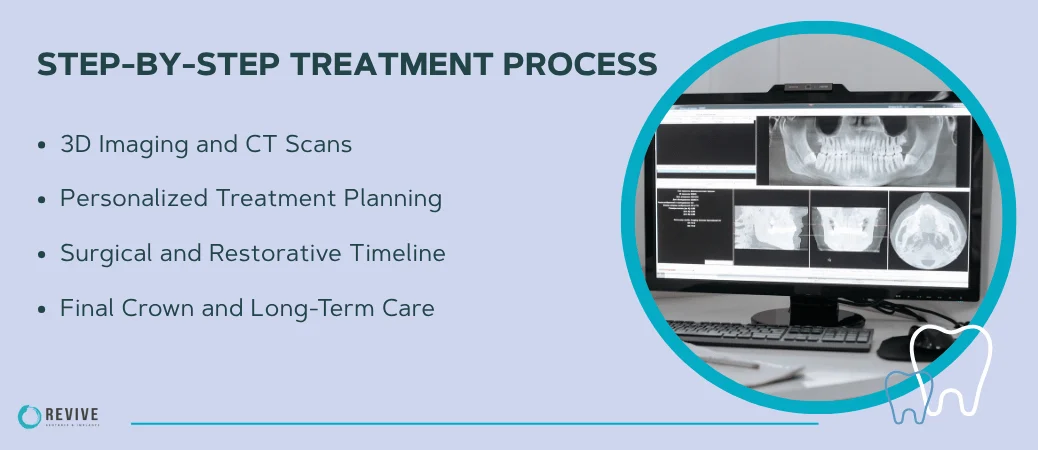
3D Imaging and CT Scans
Your evaluation starts with detailed imaging that shows your bone structure in three dimensions.
CT scans provide crucial information about bone quality, bone volume, and the exact position of nerves and sinuses in your jaw.
This 3D imaging lets your prosthodontist plan the precise angle and depth for each implant before surgery begins.
The scans also reveal whether you have enough bone density to support immediate loading or if you’ll need additional preparation first.
Your care team reviews these images along with your medical history and gum health. This thorough evaluation helps them determine if you qualify for same-day provisional teeth or need a delayed approach instead.
Personalized Treatment Planning
Your prosthodontist uses your CT scans to create a detailed surgical and restorative plan. This plan shows exactly where each implant will go and how many implants you need based on your anatomy.
Key planning factors include:
- Number and position of implants needed
- Whether extractions happen the same day
- Type of provisional teeth you’ll receive
- Materials for your final restoration
- Expected timeline from surgery to final teeth
Your treatment plan is based on what your imaging shows and what will give you the most predictable outcome. Your team explains each step and answers questions about what to expect during and after your dental implant procedure.
Surgical and Restorative Timeline
On surgery day, your prosthodontist places the implants according to your custom plan. When initial stability is strong enough, provisional teeth attach to your implants the same day.
You leave with functional temporary teeth while your bone heals around the implants. This healing process called osseointegration typically takes 2-6 months even though you already have teeth in place.
During healing, you’ll follow a modified diet and keep the area clean. Your team schedules follow-up visits to check that your implants are integrating properly and your gums are healing as expected.
Final Crown and Long-Term Care
Once osseointegration is complete, your prosthodontist replaces your provisional teeth with your permanent crown or full-arch restoration. An abutment connects your implant to your final crown in single-tooth cases.
Your permanent restoration is stronger and more polished than your provisional teeth. It’s designed to handle normal chewing forces and match the appearance of natural teeth.
Long-term success depends on:
- Brushing and flossing around your implants daily
- Attending regular dental checkups
- Avoiding excessive force like teeth grinding
- Not smoking, which can compromise healing
Your implant treatment doesn’t end when you get your final teeth. Ongoing care helps your restoration last for many years.
Cost Considerations and Value for Patients
Same-day dental implants typically cost more than traditional options, but understanding the price factors and long-term benefits helps you make an informed financial decision.
Patients often pay a premium for immediate results, though insurance coverage and financing can make treatment more accessible.
Factors Influencing Implants Cost
Several elements affect how much you’ll pay for same-day dental implants. The complexity of your case plays a major role in pricing.
If you need bone grafting or treatment for gum disease before implant placement, your total cost increases.
Your location and the dental practice you choose also impact the final price. Urban areas with higher operating costs usually charge more than rural practices.
The dentist’s experience and training with immediate loading protocols can affect fees as well.
The type and number of implants you need changes the total cost. A single tooth replacement costs less than full-arch restoration with All-on-4 implants.
Premium materials like zirconia crowns add to the expense compared to basic options.
Patients pay premium fees averaging $2,800 more for same-day implant delivery compared to traditional approaches. This reflects the advanced technology, specialized skills, and convenience you receive.
Immediate vs Long-Term Investment
The higher upfront dental implants cost for same-day procedures offers specific advantages that traditional implants don’t provide.
You avoid multiple surgeries and office visits, which saves time and reduces time off work. The immediate temporary tooth means you never have a gap in your smile.
Traditional implants spread treatment over several months with multiple appointments. While the initial implant cost appears lower, you need to factor in additional visits, temporary solutions, and extended recovery periods.
Same-day implants reduce your overall time investment significantly. You complete the surgical phase in one appointment instead of waiting three to six months between procedures.
This convenience holds real value if you have a busy schedule or travel frequently for work.
The long-term costs remain similar for both approaches. Both types require the same maintenance and have comparable lifespans when properly cared for.
Your choice often depends on whether you prefer to pay more initially for faster results or spread payments over a longer timeline.
Insurance and Financial Planning

Most dental insurance plans cover a portion of implant treatment, though coverage varies widely. Your plan might cover 50% of the implant post but exclude the crown or only provide benefits up to an annual maximum.
Same-day procedures may have different coverage terms than traditional implants.
Contact your insurance provider before treatment to understand your specific benefits. Ask about coverage for immediate loading versus delayed loading protocols.
Some plans classify same-day implants differently, which affects your out-of-pocket costs.
Many dental practices offer financing options to make treatment affordable. Payment plans let you spread the cost over 12 to 60 months with fixed monthly payments.
Some offices provide in-house financing, while others work with third-party lenders.
Health savings accounts (HSAs) and flexible spending accounts (FSAs) can help you pay for implants with pre-tax dollars. This reduces your effective implant cost by your tax rate.
Plan ahead since these accounts have annual contribution limits and specific rules about eligible expenses.
Ensuring Success: Aftercare and Oral Health Maintenance
Following aftercare instructions carefully and maintaining excellent oral hygiene helps your implants heal properly and last for years. Regular monitoring and attention to gum and bone health protect your investment.
Proper Oral Hygiene Practices
Your oral hygiene routine plays a major role in implant success. During the first few weeks, you’ll need to be gentle around the surgical sites while still keeping your mouth clean.
Brush twice daily with a soft-bristled toothbrush. Avoid the implant area for the first few days, then gently clean around it as healing progresses. Use an antimicrobial mouthwash as directed by your dentist to reduce bacteria.
You should also floss carefully around your implants once healing allows. Special floss or interdental brushes may work better than regular floss. Clean around the base of your restoration where it meets the gum line.
Key habits to maintain:
- Brush for two minutes twice daily
- Floss at least once per day
- Rinse with prescribed mouthwash
- Avoid tobacco products
- Limit sugary foods and drinks
Poor oral hygiene can lead to gum disease around your implants. This condition weakens the bone and tissue supporting your new teeth.
Follow-Up Visits and Monitoring
Your dentist will schedule several follow-up appointments to check your progress. These visits help catch any issues early before they become serious problems.
The first check-up usually happens within a week of your procedure. Your dentist examines the surgical sites and makes sure healing is on track. They’ll also answer questions about your recovery.
Additional visits occur at regular intervals during the healing phase. Your dentist takes X-rays to confirm the implant is integrating with your jawbone.
They also assess how well your temporary restoration is functioning.
Don’t skip these appointments even if you feel fine. Proper monitoring ensures long-term success and helps identify potential complications early.
Report any pain, swelling, or concerns between scheduled visits.
Managing Gum and Bone Health
Healthy bone and gum tissue provide the foundation your implants need. Protecting these structures requires ongoing attention throughout your life.
Your gums should stay pink and firm around your implants. Watch for signs of inflammation like redness, swelling, or bleeding when you brush.
These symptoms may indicate developing gum disease that needs treatment.
The bone around your implant must remain strong and dense. If you received a bone graft or bone grafting procedure, follow all recovery instructions carefully.
The grafted material needs time to integrate before it can support your implant long-term.
Eat a nutritious diet rich in calcium and vitamin D to support bone health. Avoid habits that harm your gums and bones, especially smoking.
Tobacco use significantly increases the risk of implant failure by restricting blood flow and slowing healing.
Frequently Asked Questions
Many people want to know if they qualify for same-day implants and what factors might affect their eligibility.
Your overall health, bone density, lifestyle habits, and specific oral conditions all play important roles in determining if this treatment option will work for you.
Am I a good candidate for getting dental implants in just one visit?
You might be a good candidate if you’re in good overall health and have enough bone density in your jaw.
Same-day dental implants work best when you have strong, healthy gums and adequate bone structure to support the implant.
Your dentist will also consider whether you need a single tooth replaced or multiple teeth.
If you’re replacing one tooth that was recently extracted, you may be able to get the implant placed during the same appointment as the extraction.
People who don’t grind their teeth heavily and can follow post-procedure care instructions typically have better outcomes. Your commitment to good oral hygiene also matters for long-term success.
What health conditions or medications could prevent me from getting implants right away?
Certain health conditions can make you ineligible for immediate implant placement. Uncontrolled diabetes affects how well your body heals and can lead to implant failure.
Active cancer treatment, especially radiation therapy to the head or neck area, may require you to wait. Autoimmune diseases that affect healing might also disqualify you temporarily.
Some medications like bisphosphonates used for osteoporosis can interfere with bone healing. Blood thinners may need to be adjusted before your procedure to reduce bleeding risks.
Your dentist needs to know about all medications and health conditions you have. This information helps them decide if same-day implants are safe for you or if traditional implants would be better.
How much bone do I need for an implant, and what if I don’t have enough?
You need sufficient bone density and volume in your jaw to anchor the implant securely. The exact amount depends on the size and type of implant being used.
If you’ve been missing teeth for a long time, your jawbone may have shrunk. This bone loss happens naturally when teeth are gone because the bone isn’t being stimulated anymore.
When you don’t have enough bone, you might need a bone graft first. This procedure adds bone material to your jaw but means you’ll need to wait several months before getting your implant.
Some people with moderate bone loss can still get same-day implants if their dentist uses special techniques or shorter implants. Your specific situation will determine which approach works best.
Can smokers or people with gum disease still qualify for this kind of implant treatment?
Smoking reduces blood flow to your gums and slows down healing after surgery. This puts you at higher risk for implant failure and infections.
Many dentists require you to quit smoking for at least two weeks before the procedure. Some may ask you to stop for several months to improve your chances of success.
Active gum disease is usually a disqualifying factor for same-day implants. The infection needs to be treated and controlled before any implant surgery can happen safely.
If you have a history of gum disease that’s now under control, you might still qualify. Your dentist will evaluate your current gum health and determine if the tissue is strong enough to support an implant.
What exams and scans will my dentist need to confirm if I’m eligible?
Your dentist will perform a thorough examination of your mouth and remaining teeth. They’ll check your gum health and look for signs of infection or disease.
A 3D CT scan or cone beam scan shows your bone structure in detail. This imaging reveals how much bone you have and where nerves and sinuses are located.
X-rays help your dentist see the roots of nearby teeth and any hidden problems. Digital scans of your teeth may also be taken to plan the implant placement precisely.
Blood tests might be ordered if you have certain health conditions. Your dentist may also review your medical history and current medications during this evaluation process.
What recovery time and aftercare should I expect in the first week?
You’ll likely experience some swelling and mild discomfort for the first few days after your procedure. Most people can manage pain with over-the-counter medications or prescriptions from their dentist.
Eating soft foods for the first week protects your new implant while it begins to bond with your bone. Avoid hard, crunchy, or chewy foods that could put pressure on the implant site.
You’ll need to keep the area clean but be gentle when brushing near the implant. Your dentist may recommend rinsing with salt water or a special mouthwash to prevent infection.
Plan to take it easy for at least 24 to 48 hours after surgery. Most people return to work within a day or two, but avoid strenuous exercise for about a week to prevent bleeding or swelling.
[1]added the link as we dont have the one for same day implant but the dental implant page mentioned same day option